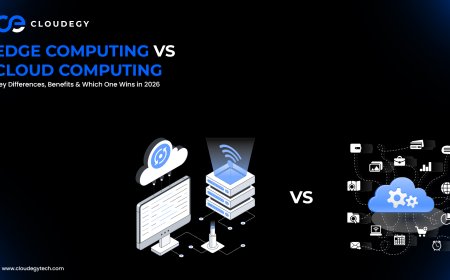

Edge Computing vs Cloud Computing: Key Differences, Benefits & Which One Wins in 2026
Compare edge computing vs cloud computing. Learn key differences, benefits, use cases, and which is best for your business in 2026.

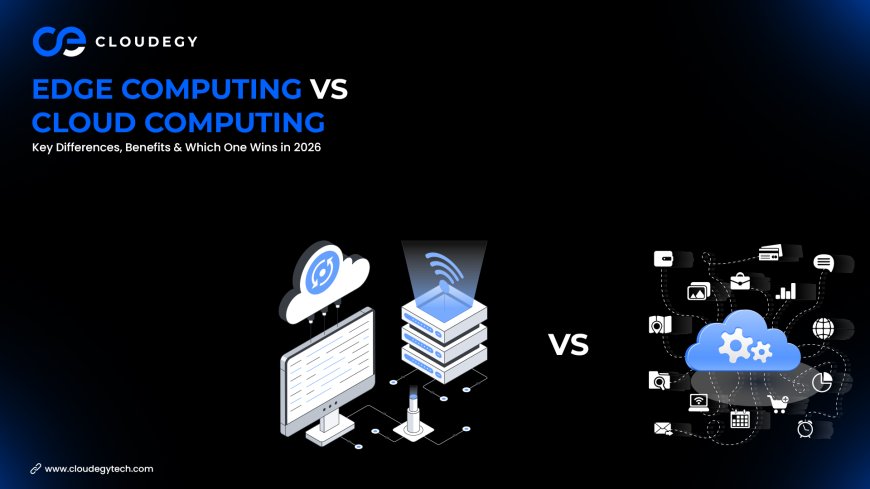
As technology evolves, businesses are constantly searching for faster, more efficient ways to process data and deliver better user experiences.
Two powerful technologies leading this transformation are cloud computing and edge computing.
While cloud computing has been the backbone of digital transformation for years, edge computing is emerging as a complementary solution that brings processing closer to users and devices.
But which one is better?
In this guide, we’ll explore the differences, benefits, use cases, and future of edge computing vs cloud computing to help you make the right decision.
☁️ What is Cloud Computing?
Cloud computing delivers computing services such as storage, servers, and applications over the internet.
Key features:
- Centralized data storage
- On-demand resources
- High scalability
- Remote accessibility
👉 Cloud is ideal for handling large-scale applications and data.
⚡ What is Edge Computing?
Edge computing processes data closer to the source (devices or local servers) instead of relying entirely on centralized cloud servers.
Key features:
- Low latency
- Real-time processing
- Reduced bandwidth usage
- Localized data handling
👉 Edge computing is designed for speed and efficiency.
🔍 Key Differences: Edge vs Cloud Computing
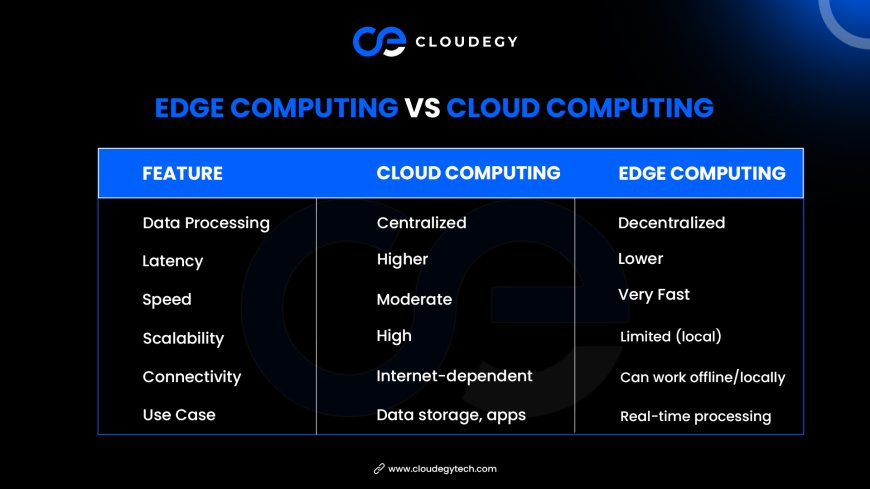
👉 Both technologies serve different purposes.
🌟 Benefits of Cloud Computing
📈 1. Scalability
Easily scale resources based on demand.
💰 2. Cost Efficiency
Pay-as-you-go model reduces upfront costs.
🌍 3. Global Access
Access data and applications from anywhere.
🔄 4. Data Backup & Recovery
Ensures data safety and reliability.
🧠 5. Advanced Services
Supports AI, analytics, and big data processing.
⚡ Benefits of Edge Computing
🚀 1. Ultra-Low Latency
Processes data instantly near the source.
🌐 2. Reduced Bandwidth Usage
Less data is sent to the cloud.
🔐 3. Improved Security
Sensitive data can be processed locally.
⚙️ 4. Real-Time Decision Making
Ideal for applications requiring instant response.
📶 5. Works with Limited Connectivity
Can operate even with poor internet.
🧩 Use Cases of Cloud Computing
🏢 Enterprise Applications
ERP, CRM, and business systems.
🛒 E-commerce
Online stores and customer data management.
📊 Data Analytics
Processing large datasets.
🎥 Media Streaming
Video and content delivery platforms.
👉 Cloud handles large-scale operations efficiently.
⚡ Use Cases of Edge Computing
🚗 Autonomous Vehicles
Real-time decision making.
🏭 Smart Manufacturing
IoT devices and automation.
🏥 Healthcare
Real-time patient monitoring.
🏙️ Smart Cities
Traffic management and surveillance.
👉 Edge excels in real-time applications.
🛡️ Edge vs Cloud: Security Comparison
🔐 Cloud Security
- Centralized protection
- Advanced encryption
- Managed security services
🔐 Edge Security
- Local data processing
- Reduced exposure
- Device-level protection
👉 Both require strong security strategies.
⚖️ When to Choose Cloud Computing
Choose cloud when you need:
- High scalability
- Global accessibility
- Data storage and analytics
- Cost-effective infrastructure
⚡ When to Choose Edge Computing
Choose edge when you need:
- Real-time processing
- Low latency
- IoT applications
- Local data handling
🔄 Edge + Cloud: The Hybrid Approach
Instead of choosing one, many businesses use both.
👉 Edge handles real-time processing
👉 Cloud manages storage and analytics
This combination delivers the best performance.
🔮 Future of Edge and Cloud Computing
The future includes:
- 5G-enabled edge computing
- AI-powered cloud systems
- Hybrid architectures
- Increased IoT adoption
👉 Edge and cloud will work together, not compete.
🏁 Conclusion
Edge computing and cloud computing are both essential technologies shaping the future of IT infrastructure.
While cloud computing offers scalability and global access, edge computing delivers speed and real-time processing.
The best approach is not choosing one over the other—but combining both to create efficient, scalable, and high-performance systems.
👉 The future is hybrid.
What's Your Reaction?
 Like
0
Like
0
 Dislike
0
Dislike
0
 Love
0
Love
0
 Funny
0
Funny
0
 Angry
0
Angry
0
 Sad
0
Sad
0
 Wow
0
Wow
0