




Cloud Storage vs NAS Storage: Which is Better for Your Business in 2026?
Compare cloud storage vs NAS storage. Learn key differences, benefits, costs, security, and which solution is best for your business in 2026.

As data continues to grow at an unprecedented rate, businesses and individuals need reliable storage solutions to manage and protect their information.
Two popular options are cloud storage and NAS (Network Attached Storage).
While both provide efficient ways to store and access data, they differ significantly in terms of scalability, accessibility, cost, and management.
In 2026, choosing between cloud storage and NAS storage depends on your specific needs, budget, and technical requirements.
This guide will help you understand the key differences, benefits, and use cases of both solutions so you can make the right decision.
☁️ What is Cloud Storage?
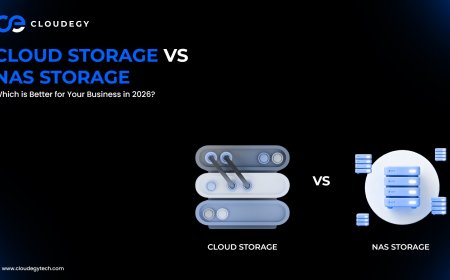
Cloud storage allows you to store data on remote servers managed by a cloud provider and access it via the internet.
Key features:
- Remote data storage
- Access from anywhere
- Scalable storage capacity
- Managed infrastructure
👉 Cloud storage is flexible and easy to use.
🖥️ What is NAS Storage?
NAS (Network Attached Storage) is a physical storage device connected to a local network, allowing multiple users to access files.
Key features:
- Local storage device
- Connected within a network
- Centralized file access
- User-controlled system
👉 NAS offers control but requires maintenance.
🔍 Key Differences: Cloud Storage vs NAS Storage
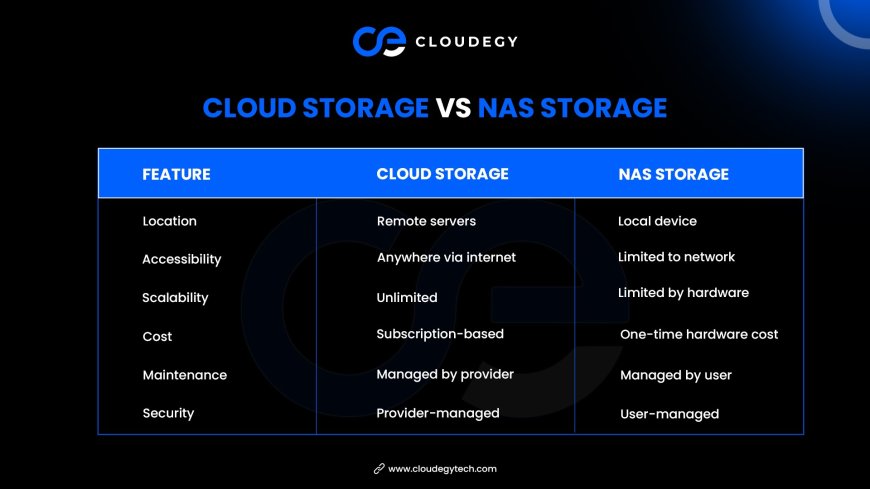
👉 The choice depends on your needs.
🌟 Benefits of Cloud Storage
🌍 1. Anywhere Access
Access files from any device, anywhere.
📈 2. Scalability
Increase storage instantly without hardware upgrades.
💰 3. Cost Efficiency
No upfront hardware investment.
🔄 4. Automatic Backup
Data is backed up automatically.
🔐 5. High Security
Advanced encryption and monitoring.
⚡ 6. Easy Collaboration
Share files and collaborate in real time.
👉 Ideal for modern, remote businesses.
🖥️ Benefits of NAS Storage
🔒 1. Full Control
You control your data and system.
💾 2. One-Time Cost
No recurring subscription fees.
📶 3. Offline Access
Access data without internet.
⚙️ 4. Customization
Configure system as per your needs.
🧩 5. Local Network Speed
Faster access within local network.
👉 Suitable for controlled environments.
💰 Cost Comparison
☁️ Cloud Storage Costs
- Monthly or yearly subscription
- Pay for usage
- No maintenance cost
🖥️ NAS Storage Costs
- Initial hardware investment
- Maintenance and upgrades
- Electricity and cooling costs
👉 Cloud is flexible, NAS is fixed-cost.
🛡️ Security Comparison
🔐 Cloud Storage Security
- Data encryption
- Multi-layer protection
- Regular updates
🔐 NAS Storage Security
- Local control
- Custom security setup
👉 Both can be secure with proper management.
🧩 Use Cases
☁️ Cloud Storage
- Remote teams
- Startups and SMEs
- File sharing and collaboration
- Backup and disaster recovery
🖥️ NAS Storage
- Small offices
- Local data storage
- Media servers
- Backup within local network
👉 Choose based on usage.
⚠️ Limitations
☁️ Cloud Storage Limitations
- Internet dependency
- Recurring costs
🖥️ NAS Storage Limitations
- Limited scalability
- Maintenance required
- Risk of hardware failure
👉 Understand the trade-offs.
🔄 Hybrid Approach
Many businesses use both solutions.
👉 Cloud for backup and remote access
👉 NAS for local storage
👉 This combination provides flexibility and security.
🔮 Future Trends
☁️ Cloud Storage Growth
Increasing adoption worldwide.
🧠 Smart Storage Solutions
AI-driven data management.
🌐 Hybrid Storage Models
Combining cloud and local storage.
👉 Storage solutions are evolving rapidly.
🏁 Conclusion
Cloud storage and NAS storage both offer valuable solutions for managing data.
Cloud storage provides scalability, accessibility, and ease of use, making it ideal for modern businesses.
NAS storage offers control, customization, and local access, making it suitable for specific environments.
👉 For most businesses in 2026, cloud storage is the preferred choice due to its flexibility and scalability.
👉 However, a hybrid approach can provide the best of both worlds.
What's Your Reaction?
 Like
0
Like
0
 Dislike
0
Dislike
0
 Love
0
Love
0
 Funny
0
Funny
0
 Angry
0
Angry
0
 Sad
0
Sad
0
 Wow
0
Wow
0