










Multi-Cloud Security Strategy: How to Secure Your Data Across Multiple Cloud Platforms in 2026
Learn how to build a powerful multi-cloud security strategy. Protect your data, manage risks, and secure multiple cloud platforms effectively in 2026.

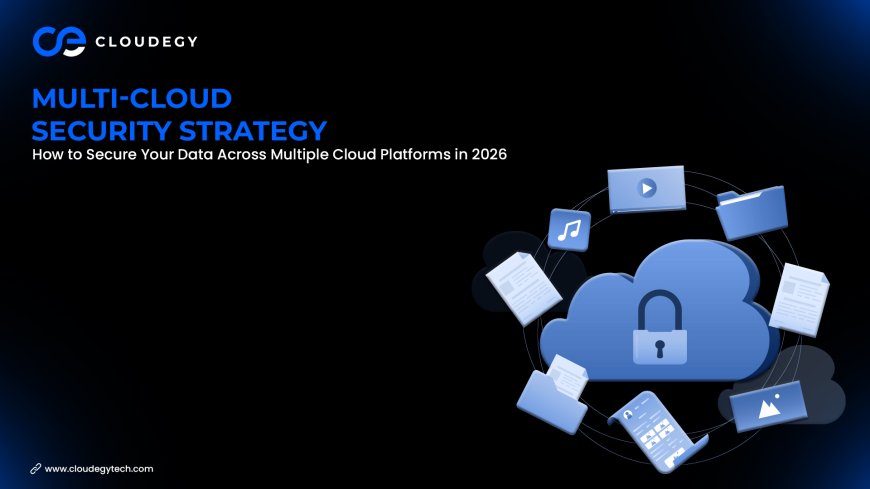
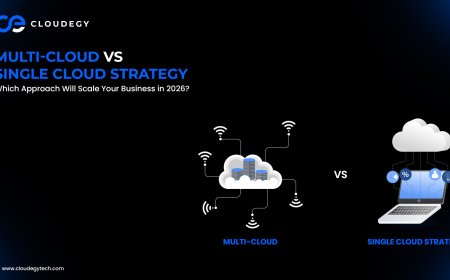
In today’s digital world, businesses are no longer relying on a single cloud provider. Instead, many organizations are adopting a multi-cloud strategy—using multiple cloud platforms to improve flexibility, performance, and cost efficiency.
While multi-cloud environments offer numerous benefits, they also introduce complex security challenges. Managing security across different platforms can be difficult, increasing the risk of data breaches and vulnerabilities.
That’s why having a strong multi-cloud security strategy is essential in 2026.
In this guide, we’ll explore how businesses can secure their multi-cloud environments, minimize risks, and ensure seamless operations.
☁️ What is Multi-Cloud Security?
Multi-cloud security refers to the practices, tools, and policies used to protect data, applications, and infrastructure across multiple cloud providers.
Example:
Using AWS, Azure, and Google Cloud together.
👉 Each platform has different security models, making unified protection essential.
🚀 Why Businesses Use Multi-Cloud
Organizations adopt multi-cloud for several reasons:
- Avoid vendor lock-in
- Improve performance and uptime
- Optimize costs
- Increase flexibility
- Enhance scalability
👉 But more clouds = more security complexity.
⚠️ Challenges in Multi-Cloud Security
Managing multiple cloud platforms introduces several risks:
🔓 Inconsistent Security Policies
Different providers have different rules.
⚙️ Misconfigurations
Errors increase with complexity.
🔑 Identity & Access Issues
Managing users across platforms is difficult.
🔍 Lack of Visibility
Hard to monitor all environments in one place.
🧩 Integration Issues
Security tools may not work across all clouds.
👉 These challenges require a unified strategy.
🛡️ Multi-Cloud Security Strategy: Best Practices
🔐 1. Centralized Identity & Access Management (IAM)
Control access across all platforms from a single system.
Best practices:
- Use Single Sign-On (SSO)
- Implement Multi-Factor Authentication (MFA)
- Apply least privilege principle
👉 One system, full control.
🔒 2. Encrypt Data Across All Clouds
Ensure data is protected everywhere.
Types:
- Data at rest
- Data in transit
- End-to-end encryption
👉 Encryption is your first line of defense.
⚙️ 3. Standardize Security Policies
Create uniform security rules for all cloud platforms.
Benefits:
- Consistency
- Reduced risk
- Easier management
👉 Standardization simplifies security.
🧑💻 4. Continuous Monitoring & Threat Detection
Monitor all cloud environments in real time.
Tools:
- SIEM systems
- Cloud security platforms
- AI-based detection
👉 Detect threats before they escalate.
🔄 5. Automated Security & Compliance
Automation reduces human error.
Use automation for:
- Security updates
- Compliance checks
- Threat responses
👉 Faster and more accurate security.
🧩 6. Secure APIs & Integrations
APIs connect different cloud services.
Risks:
- Unauthorized access
- Data leaks
Solution:
- Use authentication
- Encrypt API traffic
- Monitor API usage
🔍 7. Improve Visibility Across Platforms
Use centralized dashboards to monitor all clouds.
Benefits:
- Better insights
- Faster response
- Reduced blind spots
👉 Visibility is key to control.
🏢 8. Implement Zero Trust Architecture
Zero Trust ensures strict verification.
Principles:
- Never trust, always verify
- Continuous monitoring
- Strict access control
👉 Trust nothing, secure everything.
🔄 9. Backup & Disaster Recovery
Ensure data is always recoverable.
Best practices:
- Multi-region backups
- Regular testing
- Automated recovery
👉 Be prepared for failures.
🧠 10. Train Your Team
Security awareness is critical.
Training topics:
- Cloud risks
- Best practices
- Threat detection
👉 People are your first defense.
⚠️ Common Mistakes to Avoid
- Using different security policies for each cloud
- Ignoring misconfigurations
- Lack of monitoring
- Weak access control
- No backup strategy
👉 Avoid these to strengthen security.
🚀 Benefits of a Strong Multi-Cloud Security Strategy
- Improved data protection
- Reduced risk of breaches
- Better compliance
- Enhanced visibility
- Increased business continuity
👉 Security enables growth.
🔮 Future of Multi-Cloud Security
In 2026 and beyond, multi-cloud security is evolving with:
- AI-driven threat detection
- Automated security management
- Cloud-native security tools
- Advanced encryption technologies
👉 The future is intelligent and automated.
🏁 Conclusion
A multi-cloud strategy offers flexibility and performance—but without proper security, it can become a major risk.
By implementing a strong multi-cloud security strategy, businesses can protect their data, ensure compliance, and confidently scale their operations.
👉 Security is the backbone of successful multi-cloud adoption.
What's Your Reaction?
 Like
0
Like
0
 Dislike
0
Dislike
0
 Love
0
Love
0
 Funny
0
Funny
0
 Angry
0
Angry
0
 Sad
0
Sad
0
 Wow
0
Wow
0