














Cloud Infrastructure vs Cloud Storage: Key Differences, Benefits & Which One You Need (2026 Guide)
Cloud computing has transformed how businesses manage data and technology. However, many people confuse two important terms: cloud infrastructure and cloud storage.

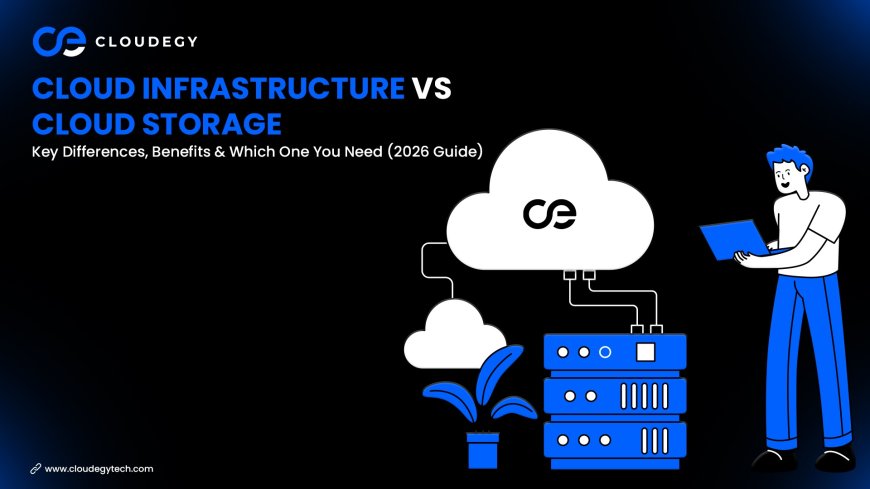
While they are closely related, they serve different purposes.
Understanding the difference between cloud infrastructure and cloud storage is essential for choosing the right solution for your business.
In this guide, we will break down both concepts, explain their benefits, and help you decide which one fits your needs.
What is Cloud Infrastructure?
Cloud infrastructure refers to the complete framework of hardware and software components that power cloud computing.
It includes:
• Servers
• Networking systems
• Virtual machines
• Data centers
• Storage systems
Cloud infrastructure is the foundation that enables all cloud services to function.
Without it, cloud storage, applications, and services would not exist.
What is Cloud Storage?
Cloud storage is a service that allows users to store, manage, and access data over the internet.
Instead of saving files on local devices, users can upload them to cloud servers and access them anytime.
Cloud storage focuses specifically on:
• File storage
• Data backup
• File sharing
• Remote access
Key Difference Between Cloud Infrastructure and Cloud Storage
The main difference is simple:
👉 Cloud infrastructure is the system
👉 Cloud storage is one of the services built on that system
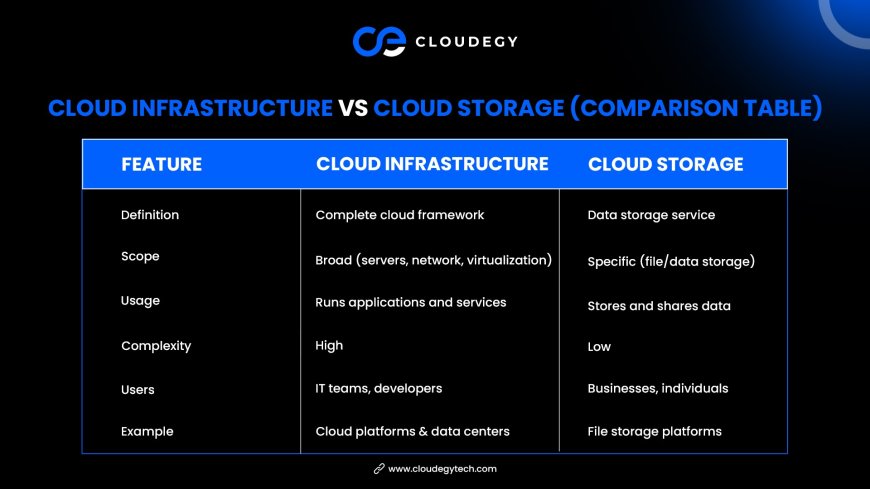
Cloud Infrastructure vs Cloud Storage (Comparison Table)
How Cloud Infrastructure Works
Cloud infrastructure operates through interconnected systems in data centers.
Key Working Process:
• Physical servers host virtual machines
• Virtualization software distributes resources
• Networking connects systems globally
• Security layers protect data
• Users access services via internet
It ensures that cloud applications and storage services run smoothly and efficiently.
How Cloud Storage Works
Cloud storage works in a simpler way:
Process:
• Users upload files to cloud servers
• Data is stored securely in data centers
• Files can be accessed anytime via internet
• Users can share files through secure links
Cloud storage platforms make file management easy and accessible.
Benefits of Cloud Infrastructure
1. Scalability
Cloud infrastructure allows businesses to scale computing resources instantly.
2. Performance
It provides high-performance computing power for applications and services.
3. Flexibility
Businesses can customize infrastructure based on their needs.
4. Reliability
Advanced systems ensure minimal downtime and high availability.
5. Security
Includes enterprise-level security features like firewalls and monitoring.
Benefits of Cloud Storage
1. Easy File Access
Access your files anytime, anywhere.
2. Secure Sharing
Share files using secure links with access control.
3. Cost-Effective
No need for physical storage devices.
4. Backup and Recovery
Automatically back up data and recover it when needed.
5. Collaboration
Teams can work on files together in real-time.
When to Use Cloud Infrastructure
Cloud infrastructure is ideal when:
• You are running applications
• You need full IT environment control
• You manage large-scale systems
• You require high computing power
When to Use Cloud Storage
Cloud storage is best when:
• You want to store and manage files
• You need file sharing solutions
• You want remote access to data
• You need backup solutions
Real-World Example
A startup uses:
• Cloud infrastructure to run its website and backend systems
• Cloud storage to store customer data, files, and documents
Both work together to create a complete cloud ecosystem.
Cloud Infrastructure + Cloud Storage: Why You Need Both
Businesses do not need to choose one over the other.
Instead, they should use both together.
Cloud infrastructure provides the power, while cloud storage provides the data management.
This combination ensures:
• Smooth operations
• Secure data handling
• Scalable growth
How Cloudegy Helps Businesses
Platforms like Cloudegy Drive provide secure and easy-to-use cloud storage solutions built on strong infrastructure.
With features like:
• Secure file storage
• Link-based sharing
• Access control
• Reliable performance
Businesses can manage data efficiently while focusing on growth.
👉 Get started here: https://drive.cloudegytech.com/
Common Mistakes to Avoid
Many businesses make these mistakes:
• Confusing infrastructure with storage
• Choosing the wrong cloud solution
• Ignoring security features
• Not planning for scalability
Understanding the difference helps avoid these issues.
Future of Cloud Technology
Cloud computing is evolving rapidly.
Future trends include:
• AI-powered infrastructure
• Smarter storage systems
• Automated scaling
• Enhanced data security
Both cloud infrastructure and storage will continue to play critical roles in digital transformation.
Conclusion
Cloud infrastructure and cloud storage are both essential parts of modern cloud computing, but they serve different purposes.
Cloud infrastructure is the backbone that powers everything, while cloud storage is the service that manages your data.
By understanding their differences and benefits, businesses can make smarter decisions and build scalable, secure, and efficient systems.
What's Your Reaction?
 Like
0
Like
0
 Dislike
0
Dislike
0
 Love
0
Love
0
 Funny
0
Funny
0
 Angry
0
Angry
0
 Sad
0
Sad
0
 Wow
0
Wow
0