

Types of Cloud Computing Explained: Public vs Private vs Hybrid (Complete 2026 Guide)
Cloud computing has become the backbone of modern digital infrastructure. Businesses today rely on cloud platforms to store data, run applications, and scale operations efficiently. However, not all cloud solutions are the same.

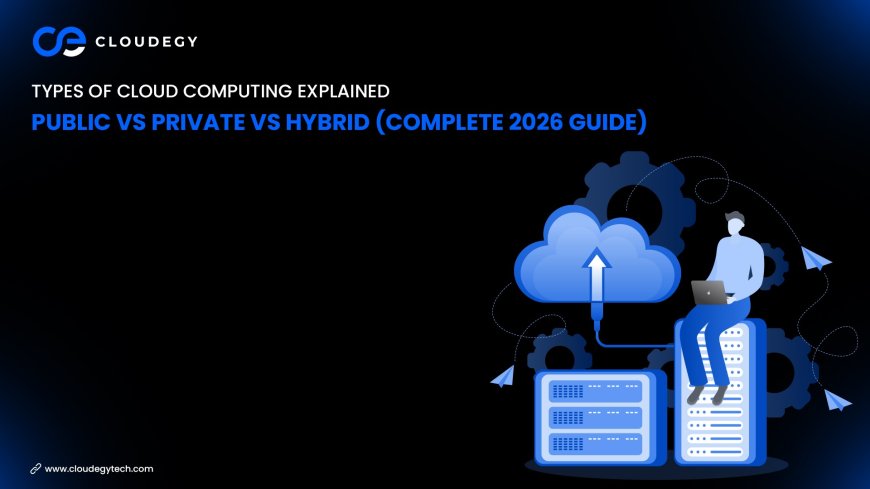
There are different types of cloud computing models designed to meet various business needs. The three main types are public cloud, private cloud, and hybrid cloud.
Understanding these cloud deployment models can help businesses choose the right solution based on their requirements for security, scalability, and performance.
In this guide, we will explain each type of cloud computing, their benefits, and how to decide which one is best for your business.
What Are Cloud Deployment Models?
Cloud deployment models define how cloud services are structured, managed, and delivered to users.
They determine:
• Who owns the infrastructure
• How resources are shared
• How secure the system is
• How scalable the platform can be
The three primary deployment models are public, private, and hybrid cloud.
1. Public Cloud
Public cloud is the most widely used type of cloud computing. In this model, cloud services are provided by third-party providers and shared across multiple users or organizations.
The infrastructure is managed by the cloud provider, and users access services over the internet.
Key Features of Public Cloud
• Shared infrastructure
• Pay-as-you-go pricing
• High scalability
• No hardware maintenance required
Benefits of Public Cloud
Cost-Effective
Businesses do not need to invest in physical hardware or infrastructure. They only pay for the resources they use.
Easy Scalability
Public cloud platforms can quickly scale up or down based on demand, making them ideal for growing businesses.
Accessibility
Users can access cloud services from anywhere with an internet connection.
Limitations of Public Cloud
• Less control over infrastructure
• Shared environment may raise security concerns for sensitive data
• Limited customization options
2. Private Cloud
Private cloud is a dedicated cloud environment used by a single organization. The infrastructure can be hosted on-premises or by a third-party provider, but it is not shared with other users.
This model offers greater control and security compared to public cloud systems.
Key Features of Private Cloud
• Dedicated infrastructure
• Enhanced security
• Greater control over data
• Customizable environment
Benefits of Private Cloud
Higher Security
Since the infrastructure is not shared, private cloud offers stronger data protection, making it suitable for sensitive information.
Full Control
Organizations have complete control over configurations, security settings, and performance.
Customization
Businesses can tailor the infrastructure to meet specific needs.
Limitations of Private Cloud
• Higher cost compared to public cloud
• Requires maintenance and management
• Limited scalability compared to public cloud
3. Hybrid Cloud
Hybrid cloud combines both public and private cloud environments. It allows businesses to use the benefits of both models by integrating them into a single system.
Companies can store sensitive data in private cloud while using public cloud resources for scalability.
Key Features of Hybrid Cloud
• Combination of public and private cloud
• Flexible resource allocation
• Improved scalability
• Balanced security and performance
Benefits of Hybrid Cloud
Flexibility
Businesses can choose where to store data and run applications based on their needs.
Cost Optimization
Organizations can use public cloud for less sensitive operations and private cloud for critical data.
Scalability with Security
Hybrid cloud allows companies to scale operations without compromising data security.
Limitations of Hybrid Cloud
• More complex to manage
• Requires proper integration between systems
• Higher setup complexity
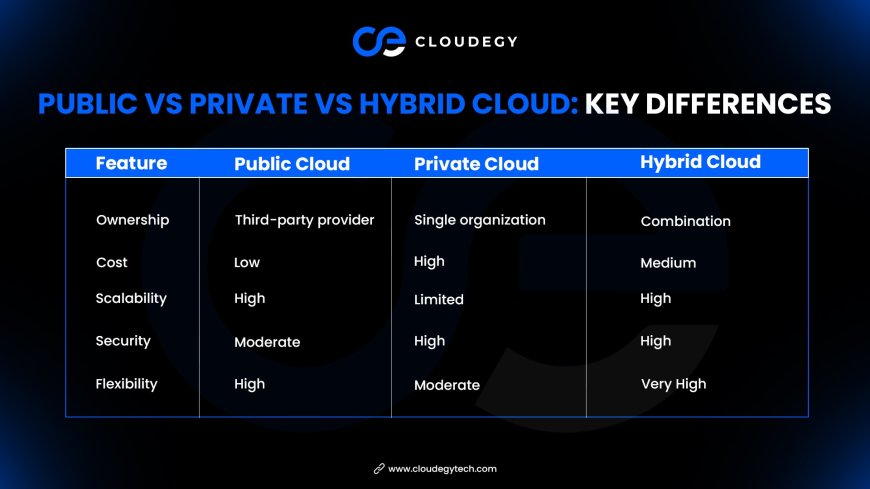
Public vs Private vs Hybrid Cloud: Key Differences
How to Choose the Right Cloud Model
Choosing the right cloud computing model depends on your business requirements.
Choose Public Cloud If:
• You want a cost-effective solution
• You need high scalability
• You have minimal IT infrastructure
Choose Private Cloud If:
• You handle sensitive or confidential data
• You need full control over infrastructure
• You require strict security compliance
Choose Hybrid Cloud If:
• You want flexibility and scalability
• You need both security and cost efficiency
• You operate in a dynamic business environment
Why Businesses Are Moving to Hybrid Cloud
Many organizations today prefer hybrid cloud solutions because they provide a balance between cost, performance, and security.
Hybrid cloud allows businesses to:
• Protect critical data in private environments
• Scale operations using public cloud resources
• Optimize costs by using the right infrastructure for the right workload
This makes hybrid cloud one of the fastest-growing cloud computing models.
Future of Cloud Deployment Models
As technology evolves, cloud computing models are becoming more advanced. Hybrid and multi-cloud strategies are gaining popularity as businesses look for flexibility and reliability.
Future trends include:
• AI-powered cloud management
• Automated resource optimization
• Enhanced cloud security systems
• Integration with edge computing
These innovations will further improve how businesses use cloud technology.
Conclusion
Cloud computing offers multiple deployment models designed to meet different business needs. Public cloud provides scalability and cost efficiency, private cloud offers enhanced security and control, while hybrid cloud delivers the best of both worlds.
Understanding the differences between these models is essential for choosing the right cloud solution.
Businesses that adopt the right cloud strategy can improve efficiency, enhance security, and scale operations more effectively in today’s competitive digital landscape.
What's Your Reaction?
 Like
0
Like
0
 Dislike
0
Dislike
0
 Love
0
Love
0
 Funny
0
Funny
0
 Angry
0
Angry
0
 Sad
0
Sad
0
 Wow
0
Wow
0