











Disaster Recovery in Cloud: How to Protect Your Business from Data Loss & Downtime in 2026
Learn disaster recovery in cloud computing. Protect your business from data loss, downtime, and cyber threats with proven strategies in 2026.

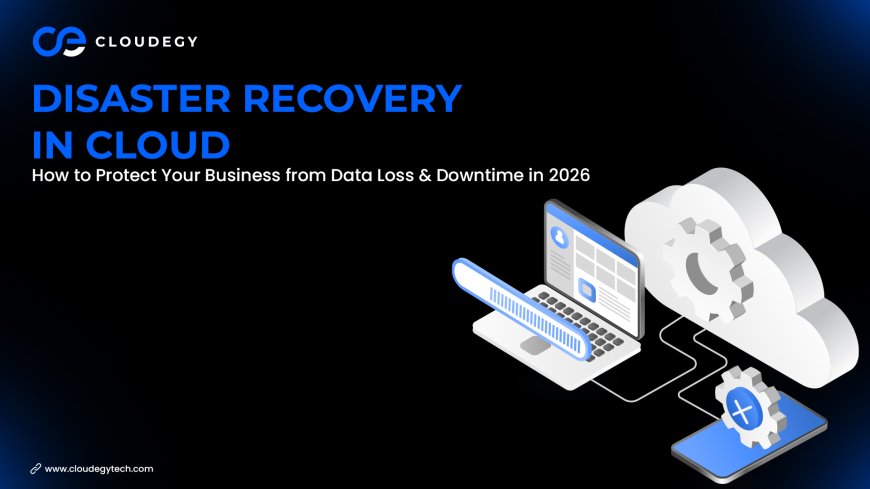
In today’s digital-first world, data is the backbone of every business. From customer information to critical operations, everything depends on data availability. But what happens when disaster strikes?
Whether it’s a cyberattack, system failure, natural disaster, or human error—data loss and downtime can cause serious damage to your business.
This is where cloud disaster recovery (CDR) becomes essential.
In 2026, businesses must go beyond basic backups and implement a strong disaster recovery strategy to ensure business continuity.
This guide will help you understand disaster recovery in cloud computing, its importance, and how to build a reliable recovery plan.
☁️ What is Disaster Recovery in Cloud?
Disaster recovery in cloud computing refers to strategies and solutions used to restore data, applications, and systems after a disruption.
It includes:
- Data backup
- System recovery
- Failover mechanisms
- Business continuity planning
👉 The goal is simple: minimize downtime and data loss.
🚀 Why Disaster Recovery is Critical
Without a proper recovery plan, businesses risk:
- Permanent data loss
- Financial losses
- Operational downtime
- Loss of customer trust
👉 Even a few minutes of downtime can cost thousands.
⚠️ Common Causes of Data Loss
🔓 Cyber Attacks
Ransomware and hacking can compromise your data.
⚙️ System Failures
Hardware or software failures can disrupt operations.
👤 Human Errors
Accidental deletion or misconfiguration.
🌍 Natural Disasters
Floods, fires, or earthquakes affecting data centers.
👉 Disasters are unpredictable—preparation is essential.
🛡️ Key Components of Cloud Disaster Recovery
🔄 1. Data Backup
Regular backups ensure your data is safe.
Types:
- Full backup
- Incremental backup
- Differential backup
⚡ 2. Failover Systems
Automatically switch to backup systems during failure.
👉 Ensures zero or minimal downtime.
🧩 3. Recovery Plan
A structured plan for restoring systems and data.
⏱️ 4. RTO & RPO
RTO (Recovery Time Objective)
Time to restore systems.
RPO (Recovery Point Objective)
Amount of data loss acceptable.
👉 These define your recovery goals.
🌐 5. Multi-Region Storage
Store data in multiple locations.
👉 Protects against regional failures.
🚀 Types of Cloud Disaster Recovery Strategies
🔁 Backup & Restore
Basic method using stored backups.
👉 Simple but slower recovery.
🔄 Pilot Light
Minimal setup running in the cloud.
👉 Faster recovery than backup.
⚡ Warm Standby
Partially active system ready to scale.
👉 Balanced cost and speed.
🚀 Multi-Site Active-Active
Fully active systems in multiple locations.
👉 Highest availability, highest cost.
🛡️ Best Practices for Cloud Disaster Recovery
🔐 Automate Backups
Ensure regular and consistent data protection.
🔍 Test Recovery Plans
Regular testing ensures effectiveness.
👉 A plan not tested is a plan not trusted.
🔑 Secure Backup Data
Protect backups with encryption and access control.
⚙️ Monitor Systems Continuously
Detect failures early.
🧠 Train Your Team
Ensure everyone knows what to do during a disaster.
🌍 Use Multi-Cloud or Hybrid Strategy
Avoid dependency on a single provider.
⚠️ Common Mistakes to Avoid
- Not having a recovery plan
- Infrequent backups
- Ignoring testing
- Storing backups in one location
- Lack of security for backup data
👉 Avoid these to stay prepared.
📈 Benefits of Cloud Disaster Recovery
- Reduced downtime
- Data protection
- Business continuity
- Faster recovery
- Cost efficiency
👉 Prepared businesses recover faster.
🏢 Cloud vs Traditional Disaster Recovery
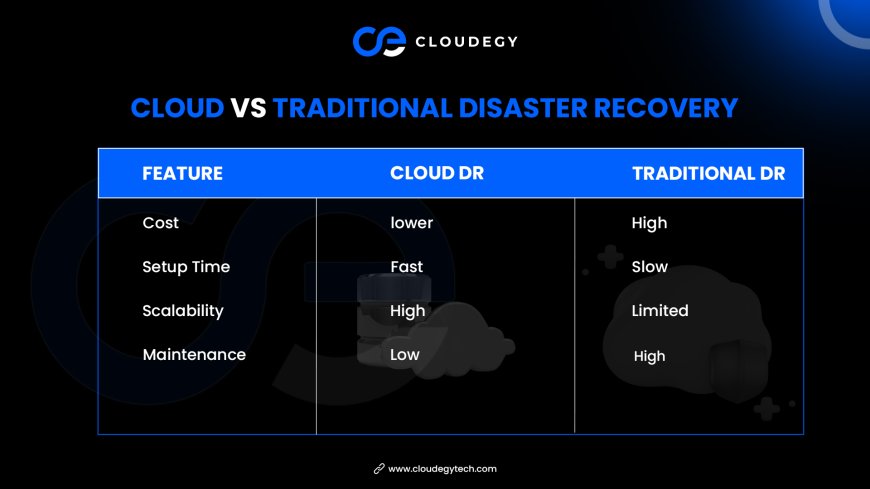
👉 Cloud is the modern solution.
🔮 Future of Cloud Disaster Recovery
The future includes:
- AI-based recovery systems
- Automated failover
- Real-time backup
- Predictive failure detection
👉 Recovery will become faster and smarter.
🏁 Conclusion
Disaster recovery in cloud computing is no longer optional—it’s a necessity.
With increasing risks and growing dependence on digital systems, businesses must ensure they can recover quickly from any disruption.
By implementing a strong disaster recovery strategy, you can protect your data, reduce downtime, and maintain business continuity.
👉 Prepare today to survive tomorrow.
What's Your Reaction?
 Like
0
Like
0
 Dislike
0
Dislike
0
 Love
0
Love
0
 Funny
0
Funny
0
 Angry
0
Angry
0
 Sad
0
Sad
0
 Wow
0
Wow
0