

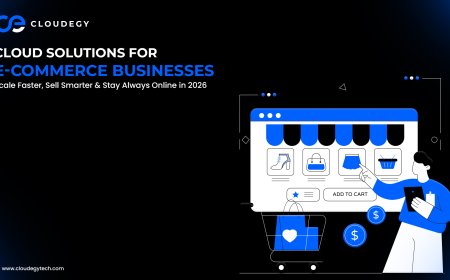





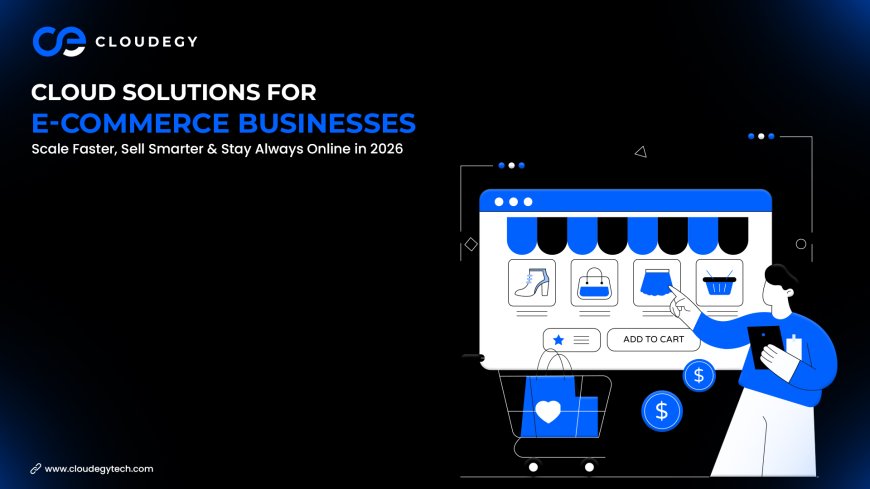
Cloud Solutions for E-commerce Businesses: Scale Faster, Sell Smarter & Stay Always Online in 2026
Discover the best cloud solutions for e-commerce businesses. Learn how to scale, improve performance, and ensure security for your online store in 2026.

The e-commerce industry has transformed the way people shop. Customers expect fast-loading websites, secure transactions, and seamless user experiences—anytime, anywhere.
But behind every successful online store lies a powerful technology foundation.
This is where cloud solutions come into play.
Cloud computing enables e-commerce businesses to handle traffic spikes, manage large volumes of data, and deliver consistent performance without downtime.
In 2026, cloud solutions are not just an advantage—they are essential for survival and growth in the competitive e-commerce landscape.
☁️ What are Cloud Solutions for E-commerce?
Cloud solutions for e-commerce refer to using cloud-based infrastructure and services to host, manage, and scale online stores.
These include:
- Cloud hosting
- Data storage
- Security services
- Content delivery networks (CDNs)
- Backup and recovery systems
👉 Cloud powers every aspect of modern e-commerce operations.
🚀 Why E-commerce Businesses Need Cloud Solutions
E-commerce platforms deal with:
- High traffic volumes
- Real-time transactions
- Customer data management
- Seasonal demand spikes
Traditional infrastructure often fails to handle these efficiently.
👉 Cloud provides the flexibility and performance needed to succeed.
🌟 Key Benefits of Cloud Solutions for E-commerce
⚡ 1. High Performance & Speed
Cloud infrastructure ensures fast loading times and smooth browsing.
👉 Better performance = higher conversions.
📈 2. Scalability During Peak Traffic
Handle traffic spikes during sales and promotions.
👉 No crashes during high demand.
🔐 3. Enhanced Security
Protect customer data and payment information.
👉 Build trust with customers.
💰 4. Cost Efficiency
Pay only for the resources you use.
👉 Reduce infrastructure costs.
🌍 5. Global Reach
Serve customers worldwide with minimal latency.
🔄 6. Backup & Disaster Recovery
Ensure quick recovery in case of failure.
🧠 7. Data Analytics
Gain insights into customer behavior.
🔄 8. Flexibility & Integration
Easily integrate with tools and platforms.
🧩 Key Components of E-commerce Cloud Infrastructure
🖥️ 1. Cloud Hosting
Hosts your website and applications.
💾 2. Storage Systems
Stores product data, images, and customer information.
🌐 3. Content Delivery Network (CDN)
Delivers content faster to users globally.
🔐 4. Security Layer
Protects against cyber threats.
⚙️ 5. Monitoring Tools
Track performance and uptime.
👉 These components ensure smooth operations.
🛡️ Best Practices for E-commerce Cloud Solutions
🔐 Implement Strong Security
- Use SSL encryption
- Enable multi-factor authentication
- Monitor suspicious activity
⚙️ Optimize Website Performance
- Use caching
- Compress images
- Optimize code
🔄 Regular Backups
Ensure data is always recoverable.
📊 Monitor Traffic & Performance
Identify and fix issues quickly.
💰 Manage Costs
Avoid overusing resources.
⚠️ Common Challenges
🔐 Security Risks
Data breaches and cyber attacks.
⚙️ Downtime Issues
Poor infrastructure can cause outages.
💰 Cost Mismanagement
Improper usage increases costs.
🔄 Integration Complexity
Connecting multiple tools can be difficult.
👉 Proper planning helps overcome these challenges.
🏢 Types of Cloud Models for E-commerce
🌍 Public Cloud
Cost-effective and scalable.
🏠 Private Cloud
More control and security.
🔄 Hybrid Cloud
Balance between flexibility and control.
👉 Choose based on business needs.
🔮 Future of Cloud in E-commerce
The future includes:
- AI-driven personalization
- Faster checkout systems
- Voice commerce integration
- Real-time inventory management
👉 Cloud will drive the next wave of e-commerce innovation.
🏁 Conclusion
Cloud solutions have become the backbone of modern e-commerce businesses.
They provide the speed, scalability, and security needed to deliver exceptional customer experiences and handle growing demand.
By adopting cloud technology, e-commerce businesses can stay competitive, reduce costs, and scale effortlessly.
👉 The future of e-commerce is cloud-powered.
What's Your Reaction?
 Like
0
Like
0
 Dislike
0
Dislike
0
 Love
0
Love
0
 Funny
0
Funny
0
 Angry
0
Angry
0
 Sad
0
Sad
0
 Wow
0
Wow
0