















Cloud Infrastructure Explained: What It Is, How It Works & Why It Matters (2026 Guide)
In today’s digital-first world, businesses rely heavily on technology to operate efficiently. From storing data to running applications, modern organizations need reliable and scalable systems. This is where cloud infrastructure plays a crucial role.

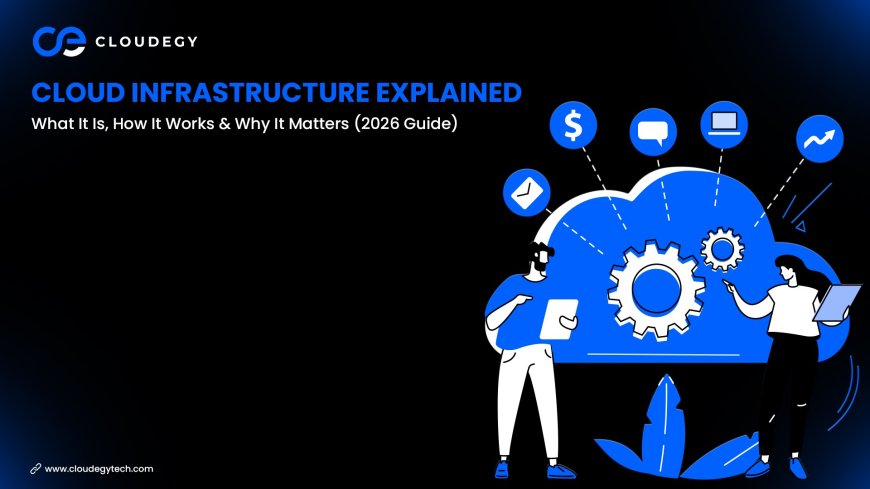
Cloud infrastructure forms the foundation of cloud computing, enabling businesses to access computing resources such as servers, storage, and networking through the internet.
In this guide, we will explain what cloud infrastructure is, how it works, its key components, and why it is essential for businesses in 2026 and beyond.
What is Cloud Infrastructure?
Cloud infrastructure refers to the collection of hardware and software components required to deliver cloud computing services.
These components include:
• Servers
• Storage systems
• Networking equipment
• Virtualization software
• Data centers
Instead of relying on physical systems located on-site, cloud infrastructure allows businesses to use remote resources hosted in secure data centers.
This means organizations can access powerful computing capabilities without investing in expensive hardware.
How Cloud Infrastructure Works
Cloud infrastructure operates through a network of interconnected servers located in data centers. These servers store data, run applications, and deliver services over the internet.
Here’s a simplified breakdown of how it works:
1. Data Storage in Remote Servers
When a user uploads files or runs applications, the data is stored in remote servers hosted in secure cloud data centers.
2. Virtualization Technology
Virtualization allows multiple virtual machines to run on a single physical server. This maximizes resource usage and improves efficiency.
3. Internet-Based Access
Users can access cloud resources through web browsers, mobile apps, or software interfaces from anywhere in the world.
4. Resource Allocation
Cloud systems dynamically allocate computing resources based on demand. This ensures optimal performance and scalability.
5. Security and Monitoring
Cloud providers implement security measures such as encryption, firewalls, and monitoring systems to protect data and ensure smooth operations.
Key Components of Cloud Infrastructure
Understanding the core components of cloud infrastructure is essential for businesses adopting cloud technology.
1. Compute (Servers)
Compute resources include virtual machines and physical servers that process data and run applications.
These servers provide the processing power needed for business operations.
2. Storage Systems
Cloud storage systems store data securely and allow users to access files anytime.
Types of cloud storage include:
• Object storage
• Block storage
• File storage
3. Networking
Networking components connect cloud resources and enable data transfer between servers, users, and applications.
This includes:
• Internet connectivity
• Load balancers
• Firewalls
4. Virtualization
Virtualization software allows multiple virtual environments to run on a single physical system, improving efficiency and reducing costs.
5. Data Centers
Cloud infrastructure is hosted in large data centers equipped with advanced security, cooling systems, and backup power supplies.
These facilities ensure high availability and reliability.
Benefits of Cloud Infrastructure
Cloud infrastructure offers several advantages that make it essential for modern businesses.
Cost Efficiency
Businesses do not need to invest in expensive hardware or maintain physical infrastructure. Cloud providers handle maintenance and upgrades.
Scalability
Cloud infrastructure allows businesses to scale resources up or down based on demand.
High Availability
Cloud systems are designed to minimize downtime and ensure continuous access to data and applications.
Data Security
Advanced security measures protect data from unauthorized access and cyber threats.
Remote Accessibility
Employees can access cloud resources from anywhere, supporting remote work and global collaboration.
Types of Cloud Infrastructure
Cloud infrastructure can be deployed in different ways depending on business needs.
Public Cloud Infrastructure
Resources are shared across multiple users and managed by third-party providers.
Private Cloud Infrastructure
Dedicated infrastructure used by a single organization, offering greater control and security.
Hybrid Cloud Infrastructure
A combination of public and private cloud systems, providing flexibility and scalability.
Cloud Infrastructure vs Traditional IT Infrastructure
Traditional IT infrastructure requires businesses to manage physical servers and hardware on-site.
Cloud infrastructure, on the other hand, offers:
• Lower costs
• Greater flexibility
• Faster deployment
• Reduced maintenance
This makes cloud infrastructure a more efficient and modern solution.
Use Cases of Cloud Infrastructure
Cloud infrastructure is widely used across industries.
Startups use it for scalable growth.
Enterprises rely on it for managing large-scale operations.
Developers use it for building and deploying applications.
Remote teams use it for collaboration and file sharing.
Future of Cloud Infrastructure
Cloud infrastructure is evolving rapidly with new technologies.
Key trends include:
• AI-powered infrastructure management
• Edge computing integration
• Enhanced cybersecurity solutions
• Automated cloud operations
These advancements will further improve efficiency, security, and performance.
Why Cloud Infrastructure Matters for Businesses
Cloud infrastructure is no longer optional — it is essential for businesses that want to stay competitive.
It enables organizations to:
• Reduce operational costs
• Improve efficiency
• Scale operations quickly
• Enhance data security
• Support digital transformation
Businesses that adopt cloud infrastructure gain a significant advantage in today’s digital economy.
Conclusion
Cloud infrastructure is the backbone of modern cloud computing. It provides the technology and resources needed to store data, run applications, and manage business operations efficiently.
By understanding how cloud infrastructure works and its key benefits, businesses can make informed decisions about adopting cloud technology.
As digital transformation continues, cloud infrastructure will play an even greater role in shaping the future of business and technology.
What's Your Reaction?
 Like
0
Like
0
 Dislike
0
Dislike
0
 Love
0
Love
0
 Funny
0
Funny
0
 Angry
0
Angry
0
 Sad
0
Sad
0
 Wow
0
Wow
0