









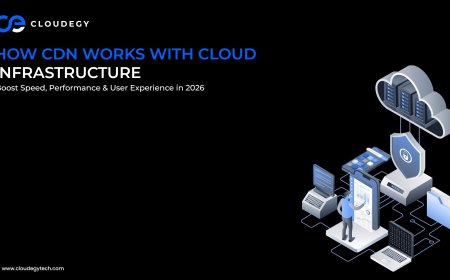







How CDN Works with Cloud Infrastructure: Boost Speed, Performance & User Experience in 2026
Learn how CDN works with cloud infrastructure to improve speed, reduce latency, and enhance user experience. Complete beginner to advanced guide for 2026.

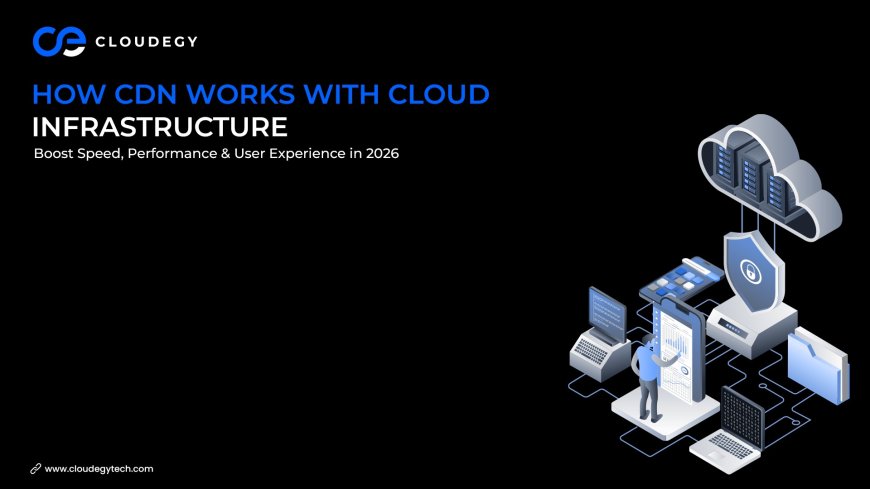
In today’s digital world, speed is everything.
Users expect websites and apps to load in seconds—
👉 or they leave.
Even a delay of a few seconds can result in:
- Lost customers
- Higher bounce rates
- Reduced conversions
So the real question is:
👉 How do modern businesses deliver fast experiences globally?
The answer lies in combining CDN (Content Delivery Network) with cloud infrastructure.
This powerful combination ensures your content reaches users faster—no matter where they are.
☁️ The Simple Idea
Let’s simplify it:
- Cloud Infrastructure = Where your data lives
- CDN = How your data reaches users faster
👉 One stores
👉 One delivers
Together, they create a high-performance system.
🌐 What is a CDN?
A CDN (Content Delivery Network) is a network of servers distributed across multiple locations worldwide.
Its job is simple:
👉 Deliver content from the nearest server to the user
💡 How It Works (Basic Flow)
- User requests a website
- CDN identifies nearest server
- Content is delivered from that server
- Load time reduces drastically
👉 Distance decreases = speed increases
☁️ What is Cloud Infrastructure?
Cloud infrastructure is the backend system where your:
- Applications
- Databases
- Files
are stored and managed.
💡 Role in Performance
Cloud ensures:
- Scalability
- Availability
- Reliability
👉 But alone, it doesn’t guarantee speed globally
🔄 How CDN Works with Cloud Infrastructure
Now let’s connect the two.
⚙️ Step-by-Step Process
1. Content Stored in Cloud
Your data (images, videos, website files) is stored in cloud servers
2. CDN Copies Content
CDN caches (stores) copies of this content across multiple locations
3. User Request
When a user accesses your site, request goes to CDN
4. Nearest Server Responds
CDN delivers content from the closest location
5. Faster Experience
User gets content quickly with minimal delay
👉 Result: Faster loading + better user experience
🚀 Why CDN + Cloud is Powerful
⚡ 1. Reduced Latency
Latency = delay in data transfer
CDN reduces distance → reduces delay
👉 Faster response times
🌍 2. Global Reach
Users from different locations get consistent performance
👉 Same experience worldwide
📈 3. Improved Website Speed
Faster loading =
- Better SEO
- Higher engagement
- More conversions
🛡️ 4. Enhanced Security
CDNs provide:
- DDoS protection
- Traffic filtering
- Secure content delivery
🔄 5. High Availability
If one server fails:
👉 CDN uses another
👉 No downtime issues
🧠 Real-World Example
Without CDN:
- Website hosted in one region
- Users far away experience slow speed
With CDN:
- Content delivered from nearby servers
- Speed improves drastically
👉 Same infrastructure
👉 Completely different performance
📊 CDN vs No CDN (Simple Comparison)
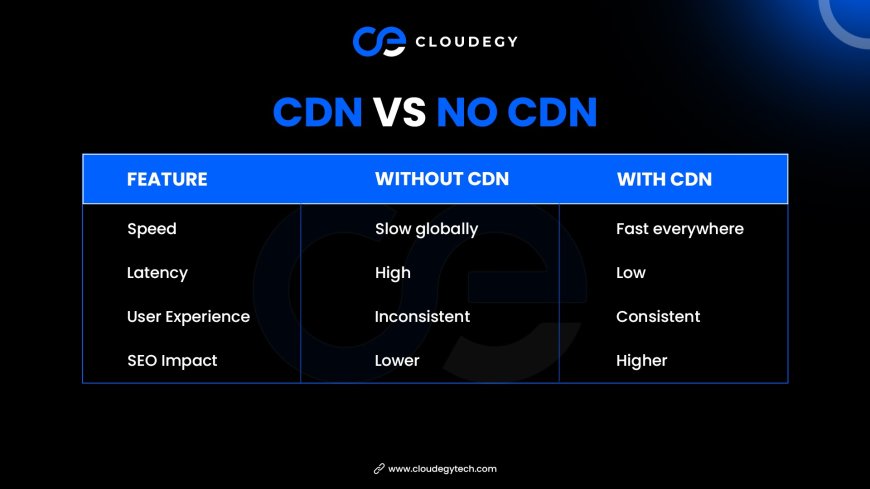
👉 CDN transforms performance
⚠️ Common Mistakes Businesses Make
❌ Relying only on cloud infrastructure
❌ Ignoring global performance
❌ Not using caching effectively
❌ No CDN integration
👉 These mistakes cost traffic and revenue
🛠️ When Do You Need a CDN?
You should use a CDN if:
- You have global users
- Your website has images/videos
- You want better SEO
- You need faster load times
👉 Almost every modern business needs it
🧩 CDN + Cloud Use Cases
🌐 Websites
Faster page loading
🛒 E-commerce
Quick product loading → more sales
📱 Apps
Better performance across regions
🎥 Media Platforms
Smooth video streaming
👉 CDN improves every digital experience
🔐 Security Perspective
CDNs add an extra security layer:
- Prevent direct server exposure
- Filter malicious traffic
- Protect against attacks
👉 Stronger defense system
🔮 Future Trends (2026 & Beyond)
- AI-powered CDN optimization
- Edge computing integration
- Real-time content delivery improvements
- Smarter caching systems
👉 CDN is evolving beyond speed
🏁 Conclusion
Cloud infrastructure gives you the foundation.
CDN gives you the speed.
👉 Together, they create a powerful system that delivers:
- Faster performance
- Better user experience
- Higher conversions
👉 In 2026, speed is not optional—it’s expected
What's Your Reaction?
 Like
0
Like
0
 Dislike
0
Dislike
0
 Love
0
Love
0
 Funny
0
Funny
0
 Angry
0
Angry
0
 Sad
0
Sad
0
 Wow
0
Wow
0