










Why Smart Startups Choose Cloud Infrastructure First (And Scale Faster Because of It)
Discover why startups should use cloud infrastructure in 2026. Learn how cloud helps reduce costs, scale faster, and build smarter businesses.

Launching a startup in 2026 is faster than ever—but surviving and scaling is harder than ever. Startups need to move quickly, stay flexible, and manage costs efficiently while competing with established players.
This is where cloud infrastructure becomes a game-changer.
Instead of investing heavily in physical servers and IT infrastructure, startups today are turning to cloud computing to build, launch, and scale their businesses efficiently.
In this guide, we’ll explore why startups should use cloud infrastructure, how it accelerates growth, and why it has become the foundation of modern entrepreneurship.
☁️ What is Cloud Infrastructure?
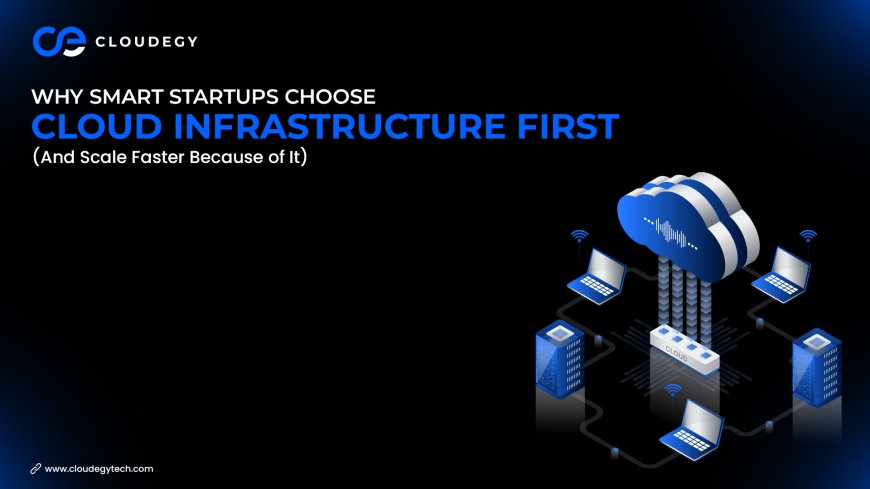
Cloud infrastructure refers to virtual computing resources such as servers, storage, networking, and software that are delivered over the internet.
It includes:
- Virtual servers
- Cloud storage
- Networking services
- Development platforms
👉 Everything you need—without owning physical hardware.
🚀 Why Cloud Infrastructure is Perfect for Startups
Startups operate in uncertain environments where agility and cost control are critical.
Cloud infrastructure provides:
- Flexibility
- Scalability
- Cost efficiency
- Speed
👉 Exactly what startups need to grow.
🌟 Top Benefits of Cloud Infrastructure for Startups
💰 1. Lower Initial Costs
Startups often have limited budgets.
With cloud infrastructure:
- No need to buy expensive hardware
- Pay only for what you use
- Reduce maintenance costs
👉 Save money and invest in growth.
⚡ 2. Faster Time to Market
Speed is everything for startups.
Cloud allows you to:
- Launch apps quickly
- Deploy services instantly
- Test ideas faster
👉 Go from idea to product in days, not months.
📈 3. Easy Scalability
As your startup grows, your infrastructure should grow with it.
Cloud enables:
- Instant scaling
- Handling traffic spikes
- Expanding globally
👉 Scale without limitations.
🌍 4. Global Accessibility
Cloud services are accessible from anywhere.
Benefits:
- Remote work support
- Global customer reach
- Seamless collaboration
👉 Build a global business from day one.
🔐 5. Built-in Security Features
Cloud providers offer advanced security tools.
Includes:
- Encryption
- Access control
- Monitoring
👉 Better security than most startups can build themselves.
🔄 6. Automatic Updates & Maintenance
No need to manage servers manually.
Cloud providers handle:
- Software updates
- Security patches
- Infrastructure maintenance
👉 Focus on your business, not IT.
🧪 7. Innovation & Experimentation
Startups need to experiment.
Cloud allows:
- Rapid testing
- Easy deployment
- Quick rollback
👉 Fail fast, learn faster.
🧩 8. Integration with Modern Technologies
Cloud platforms support:
- AI & Machine Learning
- Big Data
- IoT
👉 Build advanced solutions easily.
📊 9. Reliable Backup & Recovery
Data loss can destroy a startup.
Cloud offers:
- Automatic backups
- Disaster recovery
- Data redundancy
👉 Keep your data safe.
🧠 10. Competitive Advantage
Startups using cloud can:
- Innovate faster
- Scale quickly
- Compete with larger companies
👉 Cloud levels the playing field.
⚠️ Challenges Startups Should Consider
While cloud offers many benefits, there are challenges:
🔍 Cost Management
Without monitoring, costs can increase.
🔐 Security Responsibility
You must configure security properly.
⚙️ Vendor Lock-in
Switching providers can be difficult.
👉 Plan smart to avoid these issues.
🛡️ Best Practices for Startups Using Cloud
🔐 Implement Strong Security
- Use MFA
- Encrypt data
- Manage access carefully
💰 Monitor Cloud Costs
- Use cost tracking tools
- Optimize resource usage
🔄 Backup Regularly
Ensure data recovery in emergencies.
⚙️ Automate Processes
Reduce manual work and errors.
🧠 Train Your Team
Educate your team on cloud usage and security.
🏢 Real-World Impact of Cloud on Startups
Many successful startups rely on cloud infrastructure to:
- Launch quickly
- Scale globally
- Reduce operational costs
- Innovate faster
👉 Cloud is not optional—it’s essential.
🔮 Future of Cloud for Startups
The future includes:
- Serverless computing
- AI-powered cloud services
- Edge computing
- Multi-cloud strategies
👉 Startups will become even more cloud-driven.
🏁 Conclusion
Cloud infrastructure has transformed how startups build and grow their businesses.
It offers unmatched flexibility, scalability, and cost efficiency—allowing startups to focus on innovation instead of infrastructure.
By adopting cloud early, startups can move faster, reduce risks, and compete effectively in a digital-first world.
👉 The smarter the infrastructure, the faster the growth.
What's Your Reaction?
 Like
0
Like
0
 Dislike
0
Dislike
0
 Love
0
Love
0
 Funny
0
Funny
0
 Angry
0
Angry
0
 Sad
0
Sad
0
 Wow
0
Wow
0