




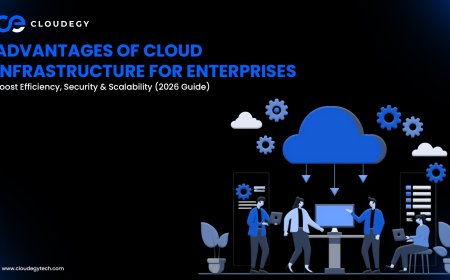








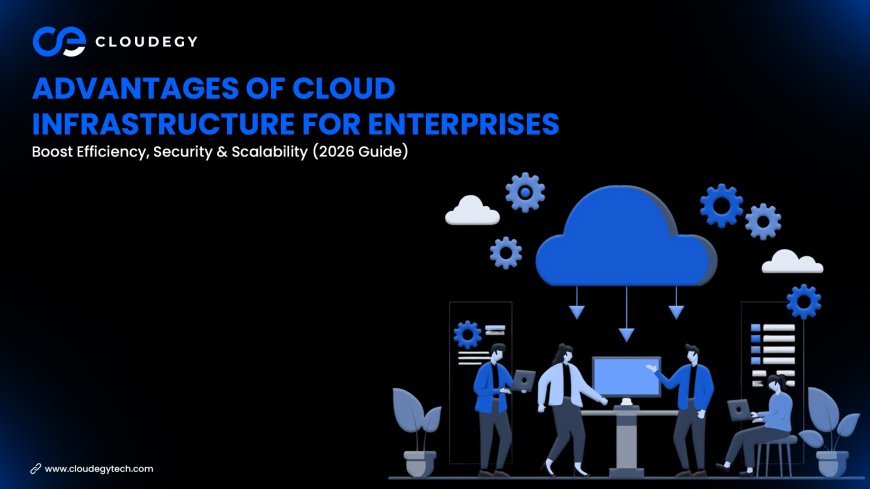
Advantages of Cloud Infrastructure for Enterprises: Boost Efficiency, Security & Scalability (2026 Guide)
In today’s fast-paced digital landscape, enterprises are under constant pressure to innovate, scale, and deliver seamless customer experiences. Traditional IT systems often struggle to meet these evolving demands.

This is where cloud infrastructure becomes a powerful solution.
Cloud infrastructure enables enterprises to access computing resources such as servers, storage, and networking over the internet—without the need for costly on-premise systems.
In this guide, we explore the key advantages of cloud infrastructure for enterprises and why it has become essential for modern business success.
What is Cloud Infrastructure?
Cloud infrastructure refers to the combination of hardware and software components that power cloud computing.
It includes:
• Virtual servers
• Storage systems
• Networking components
• Data centers
• Virtualization technologies
These resources are hosted in secure environments and delivered via the internet, allowing enterprises to operate more efficiently and flexibly.
Why Enterprises Are Moving to the Cloud
Enterprises are rapidly adopting cloud infrastructure due to:
• Growing data volumes
• Need for remote accessibility
• Demand for scalability
• Increasing cybersecurity threats
• Pressure to reduce IT costs
Cloud technology provides a flexible, scalable, and future-ready solution to these challenges.
Key Advantages of Cloud Infrastructure for Enterprises
1. Scalability and Flexibility
One of the biggest advantages of cloud infrastructure is its ability to scale.
Enterprises can:
• Increase resources during peak demand
• Reduce capacity when not needed
• Adapt quickly to business changes
This flexibility ensures optimal performance without unnecessary costs.
2. Cost Efficiency
Cloud infrastructure eliminates the need for heavy upfront investment.
Enterprises benefit from:
• No hardware purchasing
• Reduced maintenance costs
• Pay-as-you-go pricing
This improves financial efficiency and allows better budget allocation.
3. Enhanced Data Security
Security is critical for enterprises handling sensitive data.
Cloud infrastructure provides:
• Data encryption
• Advanced access controls
• Continuous monitoring
• Compliance support
These features ensure strong protection against cyber threats.
4. High Availability and Reliability
Cloud systems are designed for maximum uptime.
Enterprises get:
• Backup systems
• Disaster recovery solutions
• Redundant infrastructure
This ensures uninterrupted operations and business continuity.
5. Improved Performance
Cloud infrastructure offers powerful computing capabilities.
Benefits include:
• Faster processing speeds
• Optimized workloads
• Reduced latency
This enhances application performance and user experience.
6. Remote Accessibility
Cloud infrastructure enables access from anywhere.
This supports:
• Remote work environments
• Global team collaboration
• Flexible operations
7. Faster Deployment and Innovation
Cloud platforms allow rapid deployment of applications.
Enterprises can:
• Launch products faster
• Test and update quickly
• Innovate without delays
8. Disaster Recovery and Backup
Data loss can severely impact businesses.
Cloud infrastructure ensures:
• Automatic backups
• Quick data recovery
• Business continuity
9. Better Collaboration
Teams can collaborate efficiently using cloud-based tools.
Features include:
• Real-time file sharing
• Access permissions
• Centralized data storage
10. Global Expansion
Cloud infrastructure allows enterprises to scale globally without physical expansion.
Businesses can:
• Reach international markets
• Deliver services faster
• Expand operations easily
Real-World Use Cases
Large Enterprises
Manage large-scale operations and massive data efficiently.
Financial Institutions
Securely handle sensitive financial data and transactions.
Healthcare Organizations
Store and manage patient data with high security and compliance.
IT Companies
Deploy applications and manage client systems at scale.
How Cloudegy Supports Enterprise Needs
Solutions like Cloudegy Drive provide enterprises with secure and scalable cloud storage.
Key features include:
• Secure file storage
• Access control
• Easy sharing
• Reliable infrastructure
👉 Get started: https://drive.cloudegytech.com/
Best Practices for Enterprises Using Cloud Infrastructure
To maximize benefits, enterprises should:
• Implement strong security policies
• Monitor resource usage
• Choose scalable solutions
• Train teams on cloud tools
• Regularly back up data
Challenges Enterprises Should Consider
While cloud infrastructure offers many benefits, enterprises must address:
• Data privacy concerns
• Compliance requirements
• Vendor dependency risks
• Security management
Proper planning ensures successful cloud adoption.
Future of Cloud Infrastructure for Enterprises
Cloud infrastructure is continuously evolving with:
• AI-driven automation
• Advanced cybersecurity systems
• Edge computing integration
• Multi-cloud strategies
Enterprises adopting these innovations will stay ahead in the market.
Conclusion
Cloud infrastructure is transforming enterprise operations by offering scalability, security, and efficiency.
From reducing costs to enabling global expansion, its advantages are undeniable.
Enterprises that embrace cloud technology can innovate faster, operate smarter, and achieve long-term success.
The future of enterprise IT is cloud-driven—and the time to adopt it is now.
What's Your Reaction?
 Like
0
Like
0
 Dislike
0
Dislike
0
 Love
0
Love
0
 Funny
0
Funny
0
 Angry
0
Angry
0
 Sad
0
Sad
0
 Wow
0
Wow
0