











Digital Transformation with Cloud Technology: How Businesses Are Reinventing Growth in 2026
Discover how digital transformation with cloud technology helps businesses scale, innovate, and stay competitive in 2026. Learn key strategies and benefits.

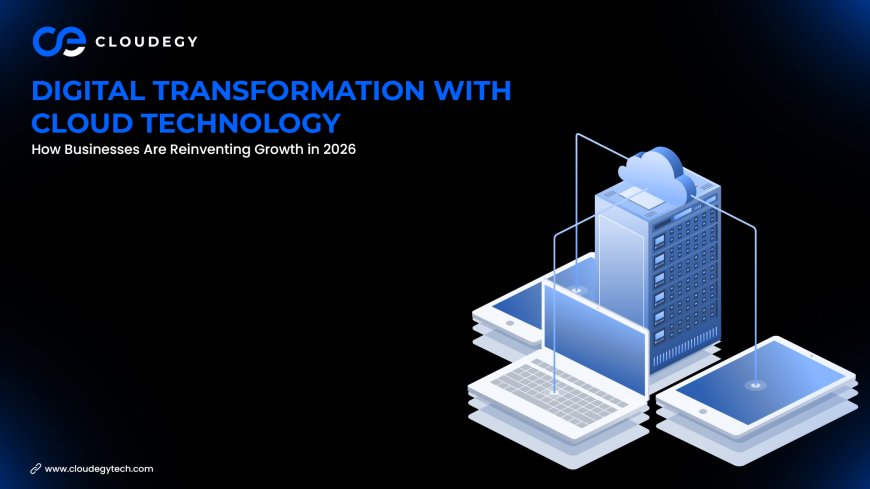
The way businesses operate has changed dramatically over the past decade. Traditional systems and processes are being replaced by faster, smarter, and more efficient digital solutions.
At the center of this shift is cloud technology—the driving force behind modern digital transformation.
In 2026, digital transformation is no longer optional. Businesses that fail to adapt risk falling behind competitors who are faster, more agile, and more innovative.
This guide explores how digital transformation with cloud technology is helping businesses reinvent operations, improve customer experiences, and achieve sustainable growth.
☁️ What is Digital Transformation?
Digital transformation is the process of integrating digital technologies into all areas of a business to improve operations, efficiency, and customer value.
It involves:
- Modernizing IT infrastructure
- Automating processes
- Enhancing customer experience
- Leveraging data for decision-making
👉 It’s about transforming how businesses operate and deliver value.
☁️ Role of Cloud Technology in Digital Transformation
Cloud technology provides the foundation for digital transformation by offering flexible, scalable, and cost-effective solutions.
Key capabilities:
- On-demand computing resources
- Scalable storage
- Remote accessibility
- Integration with modern technologies
👉 Cloud enables businesses to innovate without limitations.
🚀 Why Cloud is Essential for Digital Transformation
⚡ 1. Agility & Flexibility
Cloud allows businesses to adapt quickly to changing market conditions.
👉 Launch new services faster.
💰 2. Cost Efficiency
Reduce capital expenditure on hardware and infrastructure.
👉 Pay only for what you use.
🌍 3. Global Accessibility
Access systems and data from anywhere.
👉 Enable remote work and global operations.
🔐 4. Enhanced Security
Cloud platforms provide advanced security features.
👉 Protect sensitive data.
📈 5. Scalability
Scale resources based on demand.
👉 Grow without limitations.
🌟 Key Benefits of Digital Transformation with Cloud
🧠 1. Improved Decision Making
Cloud-based analytics provide real-time insights.
⚙️ 2. Process Automation
Automate repetitive tasks to increase efficiency.
💡 3. Innovation Enablement
Access to AI, machine learning, and advanced tools.
🎯 4. Better Customer Experience
Deliver faster and more personalized services.
🔄 5. Business Continuity
Ensure uninterrupted operations with cloud backup and recovery.
🧩 Core Components of Cloud-Driven Transformation
🖥️ 1. Cloud Infrastructure
Provides computing power and storage.
🔐 2. Security & Compliance
Ensures data protection and regulatory compliance.
⚙️ 3. Automation Tools
Improve efficiency and reduce manual work.
📊 4. Data Analytics
Transform data into actionable insights.
🔄 5. Integration Platforms
Connect different systems and applications.
🛡️ Best Practices for Digital Transformation
🔐 Prioritize Security
Implement strong security measures from the start.
⚙️ Adopt a Cloud-First Strategy
Use cloud solutions as the foundation.
🔍 Monitor Performance
Track systems and optimize continuously.
🧠 Train Employees
Ensure teams understand new technologies.
🔄 Start Small, Scale Fast
Begin with key areas and expand gradually.
⚠️ Common Challenges
- Resistance to change
- Security concerns
- Integration complexity
- Cost management
👉 Proper planning can overcome these challenges.
🏢 Real-World Impact of Cloud Transformation
Businesses using cloud technology can:
- Launch products faster
- Improve operational efficiency
- Enhance customer satisfaction
- Reduce costs
👉 Cloud transformation drives real results.
🔮 Future of Digital Transformation
The future includes:
- AI-driven automation
- Serverless computing
- Edge computing
- Hyper-personalized experiences
👉 Businesses will become fully digital and cloud-native.
🏁 Conclusion
Digital transformation with cloud technology is reshaping how businesses operate in 2026.
It enables organizations to innovate faster, scale efficiently, and deliver better customer experiences.
By adopting a cloud-first approach, businesses can stay competitive in an ever-evolving digital landscape.
👉 Transform today to lead tomorrow.
What's Your Reaction?
 Like
0
Like
0
 Dislike
0
Dislike
0
 Love
0
Love
0
 Funny
0
Funny
0
 Angry
0
Angry
0
 Sad
0
Sad
0
 Wow
0
Wow
0