















Cloud Infrastructure for Fintech Companies: How to Build Secure, Scalable & Compliant Systems in 2026
Discover how cloud infrastructure helps fintech companies build secure, scalable, and compliant systems. Learn strategies, benefits, and best practices for 2026.

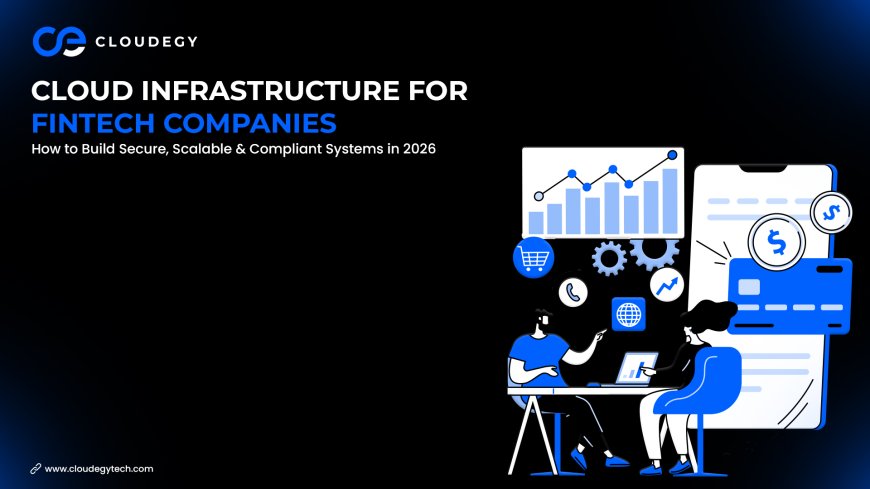
The fintech industry is transforming the way financial services operate. From digital payments to online banking and investment platforms, fintech companies are redefining convenience, speed, and accessibility.
However, with innovation comes responsibility—especially when handling sensitive financial data.
This is where cloud infrastructure becomes critical.
Cloud computing provides fintech companies with the ability to build secure, scalable, and highly reliable systems that can handle millions of transactions in real time.
In 2026, cloud is not just an enabler—it’s the backbone of fintech innovation.
☁️ What is Cloud Infrastructure in Fintech?
Cloud infrastructure in fintech refers to the use of cloud-based platforms to host, manage, and process financial applications and data.
It includes:
- Computing resources
- Secure data storage
- Networking systems
- Security and compliance tools
👉 It supports everything from payments to banking systems.
🚀 Why Fintech Companies Need Cloud Infrastructure
Fintech companies deal with:
- High transaction volumes
- Sensitive financial data
- Real-time processing
- Regulatory compliance
Cloud infrastructure helps manage all of these efficiently.
👉 Without cloud, scaling fintech operations becomes extremely difficult.
🌟 Key Benefits of Cloud Infrastructure for Fintech
🔐 1. Advanced Security
Cloud providers offer strong encryption, access control, and threat detection.
👉 Essential for protecting financial data.
📈 2. Scalability
Handle millions of users and transactions seamlessly.
👉 Scale based on demand.
⚡ 3. High Performance
Low latency and fast processing for real-time transactions.
💰 4. Cost Efficiency
Reduce infrastructure and maintenance costs.
👉 Pay only for what you use.
🌍 5. Global Accessibility
Serve customers worldwide without infrastructure limitations.
🔄 6. Reliability & Uptime
Ensure continuous service availability.
🧠 7. Innovation Enablement
Supports AI, analytics, and advanced fintech solutions.
🛡️ Security in Fintech Cloud Infrastructure
Security is the most critical aspect of fintech systems.
🔐 Encryption
Protect data in transit and at rest.
🔑 Identity & Access Management (IAM)
Control who can access systems and data.
🛡️ Threat Detection
Identify and prevent cyber threats.
🔄 Backup & Recovery
Ensure data can be restored quickly.
👉 Security must be built into every layer.
⚖️ Compliance & Regulations
Fintech companies must comply with regulations such as:
- Data protection laws
- Financial regulations
- Industry standards
Cloud platforms provide tools to help maintain compliance.
👉 Compliance builds trust and credibility.
🧩 Cloud Architecture for Fintech
🖥️ 1. Compute Layer
Handles application processing.
💾 2. Storage Layer
Stores financial data securely.
🌐 3. Network Layer
Ensures secure communication.
🔐 4. Security Layer
Protects systems and data.
⚙️ 5. Monitoring Layer
Tracks performance and threats.
👉 A well-designed architecture ensures efficiency and security.
🛠️ Best Practices for Fintech Cloud Infrastructure
🔐 Implement Zero-Trust Security
Never trust, always verify.
⚙️ Use Automation
Automate deployment and monitoring.
🔍 Continuous Monitoring
Track activity and detect threats.
🔄 Regular Backups
Prevent data loss.
🧪 Security Testing
Test systems regularly for vulnerabilities.
⚠️ Challenges in Fintech Cloud Adoption
🔐 Security Concerns
Handling sensitive financial data.
⚖️ Regulatory Compliance
Meeting strict legal requirements.
⚙️ Complexity
Managing large-scale systems.
💰 Cost Management
Avoiding unnecessary cloud expenses.
👉 Strategic planning is essential.
🔮 Future of Cloud in Fintech
The future includes:
- AI-powered fraud detection
- Real-time analytics
- Blockchain integration
- Serverless fintech applications
👉 Fintech will become more secure and efficient.
🏁 Conclusion
Cloud infrastructure is the foundation of modern fintech companies.
It enables businesses to build secure, scalable, and high-performance systems that meet the demands of today’s digital economy.
By leveraging cloud technology, fintech companies can innovate faster, improve customer experiences, and stay competitive in a rapidly evolving market.
👉 The future of fintech is cloud-driven.
What's Your Reaction?
 Like
0
Like
0
 Dislike
0
Dislike
0
 Love
0
Love
0
 Funny
0
Funny
0
 Angry
0
Angry
0
 Sad
0
Sad
0
 Wow
0
Wow
0