











What is Cloud Security? A Complete Guide to Protecting Data, Applications & Infrastructure (2026)
As businesses continue to embrace digital transformation, cloud computing has become the backbone of modern IT infrastructure. It offers scalability, flexibility, and cost efficiency—but it also introduces new security challenges.

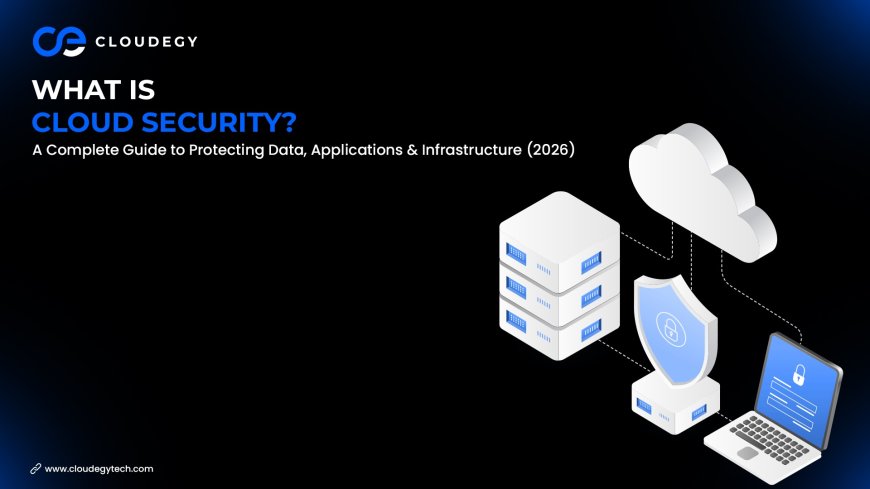
This is where cloud security plays a critical role.
Cloud security refers to the strategies, technologies, and best practices used to protect data, applications, and infrastructure in cloud environments. Whether you are using public, private, or hybrid cloud solutions, ensuring security is essential to prevent cyber threats and data breaches.
☁️ What is Cloud Security?
Cloud security is a combination of tools, policies, and controls designed to safeguard cloud-based systems. It focuses on protecting:
- Data stored in the cloud
- Applications hosted in cloud platforms
- Infrastructure such as servers, networks, and storage
Key components of cloud security include:
- Identity and Access Management (IAM)
- Data encryption
- Network security
- Threat detection and monitoring
In simple terms, cloud security ensures that only authorized users can access your systems while keeping cyber threats away.
🚨 Why Cloud Security is Important
1. Protection of Sensitive Data
Businesses store critical information such as customer data, financial records, and intellectual property in the cloud. Without proper security, this data is vulnerable to breaches.
2. Compliance and Regulations
Organizations must comply with regulations such as GDPR, HIPAA, and ISO standards. Cloud security helps meet these compliance requirements.
3. Rising Cyber Threats
Cyberattacks like ransomware, phishing, and DDoS attacks are increasing. A strong security system helps defend against these threats.
4. Remote Access Risks
With remote work becoming common, employees access cloud systems from multiple locations, increasing the attack surface.
⚠️ Common Cloud Security Risks
🔓 Data Breaches
Unauthorized access to sensitive data can lead to financial and reputational damage.
⚙️ Misconfiguration
Incorrect cloud settings are one of the most common causes of security incidents.
🔑 Weak Access Control
Poor password practices and lack of multi-factor authentication can expose systems.
🦠 Malware Attacks
Cloud-hosted applications can be targeted by malicious software.
👤 Insider Threats
Employees or internal users misusing their access privileges.
🏗️ Cloud Security Architecture
A strong cloud security architecture includes multiple layers:
1. Identity & Access Management (IAM)
Controls who can access specific resources within the cloud environment.
2. Data Encryption
Encrypts data both at rest and in transit to prevent unauthorized access.
3. Network Security
Includes firewalls, VPNs, and intrusion detection systems to protect cloud networks.
4. Monitoring & Logging
Tracks activities in real-time to detect suspicious behavior.
5. Backup & Disaster Recovery
Ensures data can be restored quickly in case of data loss or cyberattacks.
🔒 Cloud Security Best Practices
✅ Enable Multi-Factor Authentication (MFA)
Adds an extra layer of security beyond passwords.
✅ Follow Least Privilege Principle
Grant users only the access they need to perform their tasks.
✅ Regular Security Audits
Identify and fix vulnerabilities before they are exploited.
✅ Encrypt Sensitive Data
Always protect critical data with encryption.
✅ Continuous Monitoring
Use advanced tools to monitor activities and detect threats in real time.
✅ Secure APIs
APIs are often targeted by attackers—ensure they are properly secured.
✅ Employee Training
Educate employees about cybersecurity risks and best practices.
☁️ Types of Cloud Security
🌐 Network Security
Protects the cloud infrastructure from unauthorized access and attacks.
🔑 Identity Security
Manages user authentication and access permissions.
📦 Data Security
Ensures data is securely stored and transmitted.
🖥️ Application Security
Protects cloud applications from vulnerabilities and threats.
🏢 Cloud Security for Enterprises
Enterprises require advanced cloud security due to the scale of operations and sensitive data involved.
Key Requirements:
- Advanced threat detection systems
- Compliance management tools
- Scalable security solutions
- Centralized monitoring
Many organizations adopt a Zero Trust model, where no user or device is trusted by default.
🔄 Shared Responsibility Model
Cloud security operates on a shared responsibility model:
Cloud Provider Responsibilities:
- Securing infrastructure
- Maintaining physical data centers
- Providing secure network architecture
Customer Responsibilities:
- Protecting data
- Managing user access
- Securing applications
Understanding this model is crucial for effective cloud security implementation.
🚀 Future of Cloud Security
The future of cloud security is driven by innovation and automation:
- AI-powered threat detection
- Zero Trust Architecture
- Automated security monitoring
- Blockchain-based data protection
Businesses that adopt these technologies will be better prepared to handle evolving cyber threats.
🏁 Conclusion
Cloud security is essential for protecting digital assets in today’s cloud-driven world. As organizations continue to migrate to the cloud, the importance of securing data, applications, and infrastructure cannot be overstated.
By implementing strong security practices, leveraging advanced tools, and staying informed about emerging threats, businesses can create a secure and resilient cloud environment.
👉 Cloud security is not just an option—it is a necessity for long-term success.
What's Your Reaction?
 Like
0
Like
0
 Dislike
0
Dislike
0
 Love
0
Love
0
 Funny
0
Funny
0
 Angry
0
Angry
0
 Sad
0
Sad
0
 Wow
0
Wow
0