
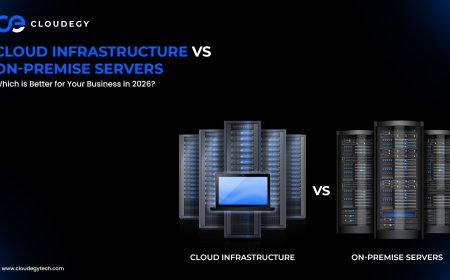



Cloud Infrastructure vs On-Premise Servers: Which is Better for Your Business in 2026?
Compare cloud infrastructure vs on-premise servers. Learn key differences, benefits, costs, security, and which solution is best for your business in 2026.

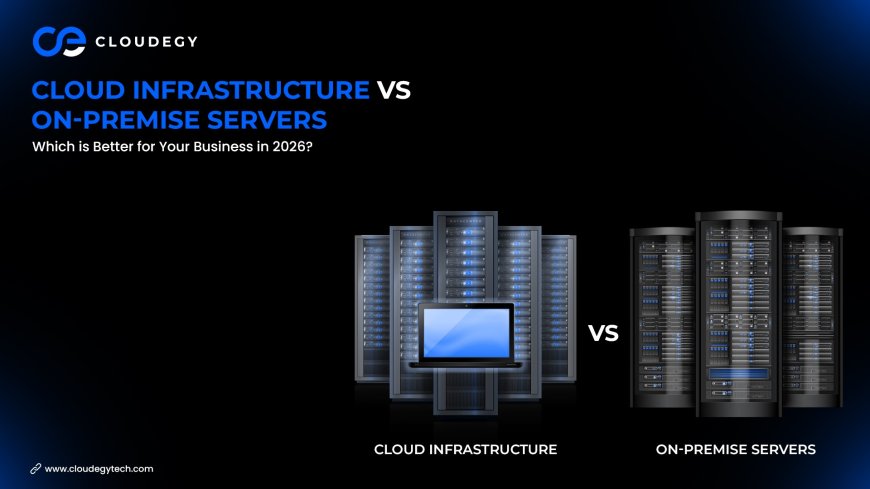
Choosing the right IT infrastructure is one of the most critical decisions for any business.
For years, on-premise servers were the standard solution. But with the rise of digital transformation, cloud infrastructure has become the preferred choice for modern businesses.
In 2026, organizations are increasingly shifting toward cloud-based solutions—but is it the right move for everyone?
In this guide, we’ll compare cloud infrastructure vs on-premise servers, covering key differences, benefits, costs, and use cases to help you make an informed decision.
☁️ What is Cloud Infrastructure?
Cloud infrastructure refers to computing resources such as servers, storage, and networking delivered over the internet.
Key features:
- On-demand access
- High scalability
- Remote accessibility
- Pay-as-you-go pricing
👉 Cloud provides flexibility and efficiency.
🖥️ What are On-Premise Servers?
On-premise servers are physical servers located within a company’s own facilities.
Key features:
- Full control over infrastructure
- Local data storage
- Fixed capacity
- High upfront cost
👉 On-premise offers control but requires maintenance.
🔍 Key Differences: Cloud vs On-Premise
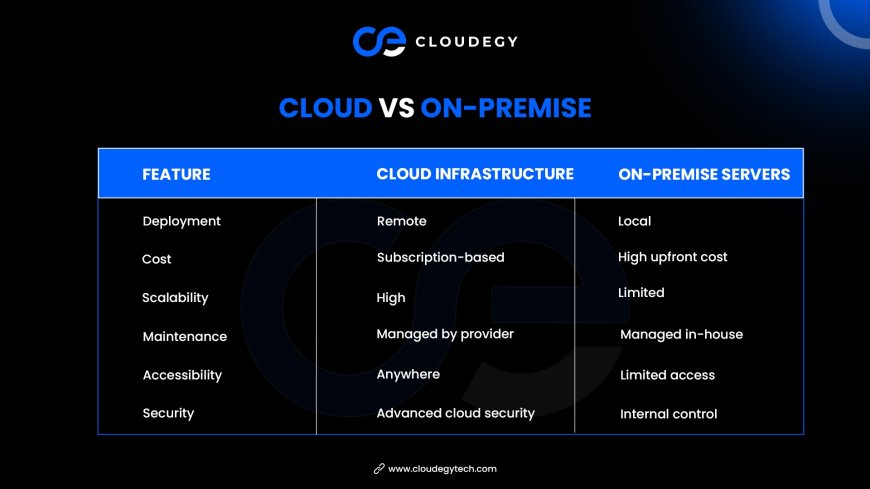
👉 Both have strengths depending on needs.
🌟 Benefits of Cloud Infrastructure
⚡ 1. Scalability
Scale resources instantly based on demand.
💰 2. Cost Efficiency
No need for expensive hardware investments.
🌍 3. Remote Access
Access systems from anywhere.
🔄 4. Automatic Updates
No manual maintenance required.
🔐 5. Advanced Security
Cloud providers offer strong security measures.
🚀 6. Faster Deployment
Set up infrastructure quickly.
👉 Cloud supports modern business needs.
🖥️ Benefits of On-Premise Servers
🔒 1. Full Control
Complete control over hardware and data.
📊 2. Customization
Tailor infrastructure to specific needs.
🔐 3. Data Privacy
Sensitive data remains on-site.
⚙️ 4. No Internet Dependency
Operations can continue without internet.
👉 On-premise is suitable for specific use cases.
💰 Cost Comparison
☁️ Cloud Costs
- Subscription-based
- Pay for usage
- Lower upfront investment
🖥️ On-Premise Costs
- High initial hardware cost
- Maintenance expenses
- Upgrade costs
👉 Cloud is generally more cost-effective.
🛡️ Security Comparison
🔐 Cloud Security
- Encryption
- AI-based threat detection
- Regular updates
🔐 On-Premise Security
- Internal control
- Custom security measures
👉 Both can be secure with proper management.
🧩 Use Cases
☁️ Cloud Infrastructure
- Startups and SMEs
- E-commerce platforms
- Remote teams
- Data analytics
🖥️ On-Premise Servers
- Highly regulated industries
- Data-sensitive organizations
- Legacy systems
👉 Choose based on business needs.
🔄 Hybrid Approach
Many businesses combine both solutions.
👉 Cloud for scalability
👉 On-premise for sensitive data
👉 Hybrid offers flexibility and control.
⚠️ Challenges
☁️ Cloud Challenges
- Internet dependency
- Ongoing costs
🖥️ On-Premise Challenges
- High maintenance
- Limited scalability
- Expensive upgrades
👉 Each option has trade-offs.
🔮 Future Trends
☁️ Cloud Growth
Increasing adoption across industries.
🌐 Hybrid Models
Combining cloud and on-premise.
🤖 AI Integration
Cloud platforms becoming smarter.
👉 The future is cloud-driven.
🏁 Conclusion
Cloud infrastructure and on-premise servers both play important roles in modern IT environments.
While on-premise servers offer control and customization, cloud infrastructure provides scalability, flexibility, and cost efficiency.
For most businesses in 2026, cloud infrastructure is the preferred choice due to its ability to support growth and innovation.
👉 The best solution often lies in a hybrid approach that combines both.
What's Your Reaction?
 Like
0
Like
0
 Dislike
0
Dislike
0
 Love
0
Love
0
 Funny
0
Funny
0
 Angry
0
Angry
0
 Sad
0
Sad
0
 Wow
0
Wow
0