













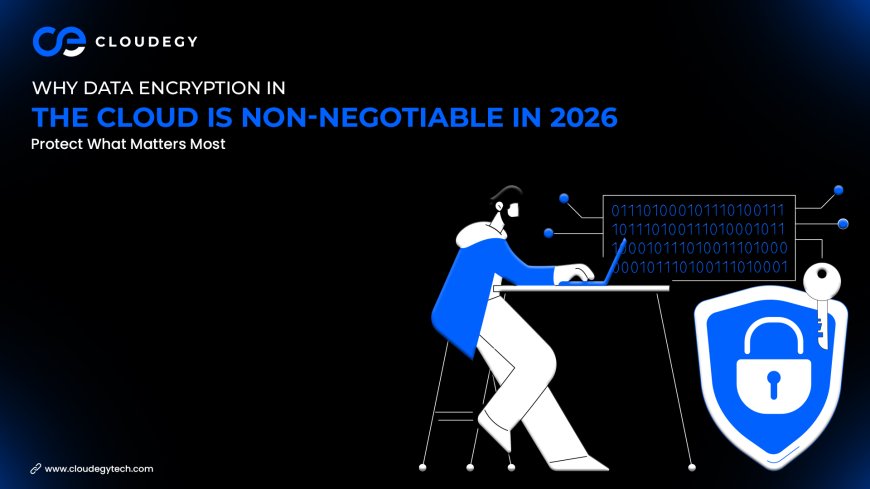
Why Data Encryption in the Cloud Is Non-Negotiable in 2026: Protect What Matters Most
Discover the importance of data encryption in cloud computing. Learn how encryption protects sensitive data and ensures security in 2026.

Cloud computing has transformed how businesses store, process, and manage data. From startups to enterprises, organizations rely on the cloud to drive efficiency and innovation.
However, as cloud adoption grows, so does the risk of cyber threats. Data breaches, unauthorized access, and cyberattacks are becoming increasingly common in 2026.
This is where data encryption in the cloud plays a critical role.
Encryption is not just a technical feature—it is a fundamental security requirement that protects sensitive data from being accessed or misused. In this guide, we’ll explore the importance of data encryption in cloud computing, how it works, and why every business must prioritize it.
☁️ What is Data Encryption in the Cloud?
Data encryption is the process of converting readable data into an unreadable format using algorithms and encryption keys.
In simple terms:
👉 Encryption turns your data into code that only authorized users can access.
Types of cloud data encryption:
- Data at rest – stored data is encrypted
- Data in transit – data moving between systems is encrypted
- End-to-end encryption – data is encrypted from sender to receiver
🔐 Why Data Encryption is Important in Cloud Computing
Encryption is the backbone of cloud security.
Key benefits:
- Protects sensitive information
- Prevents unauthorized access
- Ensures data privacy
- Supports compliance requirements
- Reduces risk of data breaches
👉 Without encryption, your data is vulnerable.
🚨 Risks of Not Using Encryption
Organizations that fail to encrypt their data face serious risks:
🔓 Data Breaches
Unencrypted data can be easily accessed by attackers.
🧑💻 Unauthorized Access
Hackers can steal sensitive information.
⚠️ Compliance Violations
Failure to meet legal requirements can result in penalties.
💰 Financial Loss
Data breaches can lead to huge financial damage.
📉 Reputation Damage
Loss of customer trust can impact long-term growth.
👉 Encryption acts as a shield against these risks.
🔑 How Data Encryption Works
Encryption uses algorithms and keys to secure data.
Process:
- Plain data (readable)
- Encryption algorithm applied
- Encrypted data (ciphertext)
- Decryption using a key
👉 Only users with the correct key can access the data.
🛡️ Types of Encryption Used in Cloud
🔒 1. Symmetric Encryption
- Uses a single key for encryption and decryption
- Fast and efficient
👉 Common for large data transfers
🔐 2. Asymmetric Encryption
- Uses two keys (public & private)
- More secure but slower
👉 Used for secure communication
🔑 3. End-to-End Encryption
- Data is encrypted at source and decrypted at destination
- No third party can access it
👉 Maximum level of security
⚙️ Best Practices for Cloud Data Encryption
✅ 1. Encrypt Data at All Levels
Protect both stored and transmitted data.
✅ 2. Use Strong Encryption Algorithms
Choose industry-standard encryption methods.
✅ 3. Manage Encryption Keys Securely
- Store keys separately
- Rotate keys regularly
✅ 4. Enable Encryption by Default
Ensure all systems automatically encrypt data.
✅ 5. Regular Security Audits
Identify vulnerabilities and improve security.
✅ 6. Combine Encryption with Other Security Measures
- Access control
- Monitoring
- Authentication
👉 Encryption works best with a layered security approach.
🧑💻 Encryption in Different Cloud Models
☁️ Public Cloud
- Managed by third-party providers
- Encryption ensures data privacy
🏢 Private Cloud
- More control over encryption
- Custom security configurations
🔄 Hybrid Cloud
- Combines both models
- Requires consistent encryption policies
🌐 Encryption & Compliance
Many industries require encryption to meet regulations.
Examples:
- GDPR
- HIPAA
- ISO standards
👉 Encryption helps businesses stay compliant and avoid penalties.
🚀 Future of Cloud Encryption
Encryption is evolving rapidly with new technologies:
- AI-powered encryption systems
- Quantum-resistant encryption
- Automated key management
- Blockchain-based security
👉 Future encryption will be smarter and stronger.
⚠️ Common Mistakes to Avoid
- Not encrypting sensitive data
- Weak encryption algorithms
- Poor key management
- Ignoring updates
- Relying only on encryption
👉 Avoid these mistakes to ensure strong security.
🏁 Conclusion
Data encryption is one of the most powerful tools for protecting information in the cloud.
In 2026, with increasing cyber threats and data breaches, encryption is no longer optional—it is essential.
By implementing strong encryption practices, businesses can safeguard sensitive data, maintain compliance, and build trust with customers.
👉 Protect your data today to secure your future.
What's Your Reaction?
 Like
0
Like
0
 Dislike
0
Dislike
0
 Love
0
Love
0
 Funny
0
Funny
0
 Angry
0
Angry
0
 Sad
0
Sad
0
 Wow
0
Wow
0