



















How Cloud Storage Reduces Business Costs
Managing business data efficiently is one of the biggest challenges for modern organizations. Companies generate large volumes of files every day, including documents, images, project files, financial records, and customer data. Traditionally, businesses relied on physical servers and local storage systems to store this information. However, maintaining physical infrastructure can be expensive and difficult to manage. This is why many companies are now switching to cloud storage solutions.

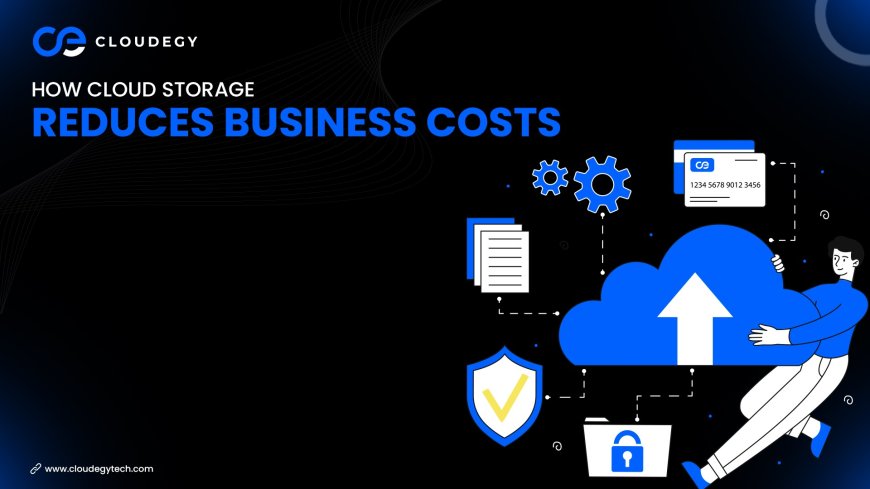
Cloud storage allows businesses to store and manage data online instead of relying on on-site hardware. This shift not only improves accessibility and security but also significantly reduces operational costs.
In this article, we’ll explore how cloud storage helps businesses save money and operate more efficiently.
What Is Cloud Storage?
Cloud storage is a technology that allows users to store digital files on remote servers that can be accessed through the internet. Instead of saving files on a local computer or office server, businesses store their data in a secure online environment.
This means employees can access files from anywhere while the storage provider handles infrastructure management, maintenance, and security.
Cloud storage has become a core component of digital business operations because it offers scalability, flexibility, and cost efficiency.
Major Ways Cloud Storage Reduces Business Costs
1. Eliminates Expensive Hardware Investments
Traditional storage systems require businesses to purchase physical servers, networking equipment, and storage devices.
These systems can be costly and require additional resources to maintain.
Cloud storage eliminates the need for these large upfront investments. Businesses can store data online without buying expensive hardware, reducing capital expenditure significantly.
2. Lower IT Maintenance Costs
Maintaining physical infrastructure requires IT staff to manage servers, install updates, monitor systems, and fix hardware issues.
With cloud storage, most of these responsibilities are handled by the cloud provider. This reduces the need for in-house technical support and lowers IT maintenance costs.
Companies can then focus their resources on business growth instead of infrastructure management.
3. Pay Only for What You Use
One of the biggest advantages of cloud storage is its flexible pricing model.
Instead of paying for large storage systems that may remain underutilized, businesses can pay only for the storage they actually use.
This pay-as-you-go approach allows companies to scale their storage needs up or down depending on business requirements, helping control operational expenses.
4. Reduces Risk of Data Loss
Data loss can be extremely expensive for businesses. Losing important files due to hardware failure, cyberattacks, or accidental deletion can disrupt operations and lead to financial losses.
Cloud storage providers typically include backup systems, redundancy, and disaster recovery features that help protect business data.
By reducing the risk of data loss, businesses avoid costly downtime and recovery expenses.
5. Improves Team Productivity
When files are stored locally, employees may spend significant time searching for documents, transferring files, or managing multiple versions of the same file.
Cloud storage simplifies file management by keeping everything in one centralized system.
Employees can access the latest version of files instantly, collaborate in real time, and work more efficiently. Increased productivity ultimately leads to cost savings for the business.
6. Supports Remote Work Without Extra Infrastructure
Modern businesses often operate with remote or distributed teams. Traditional storage systems require complex network setups to allow remote access.
Cloud storage makes remote work easier because files can be accessed securely from anywhere with an internet connection.
This allows businesses to operate with flexible work environments while reducing infrastructure costs.
Additional Financial Benefits of Cloud Storage
Beyond direct cost savings, cloud storage offers several additional financial advantages:
• Reduced office infrastructure requirements
• Lower energy consumption compared to on-site servers
• Faster deployment of new systems
• Improved collaboration and workflow efficiency
• Simplified data management processes
These factors help organizations operate more efficiently and reduce long-term operational expenses.
Why Businesses Are Moving to Cloud Storage
As businesses become more digital, the need for scalable and efficient data storage continues to grow.
Cloud storage solutions offer the flexibility needed to manage increasing data volumes while controlling costs.
Companies that adopt cloud storage often experience:
• Better resource management
• Improved operational efficiency
• Stronger data protection
• Greater scalability for growth
Because of these benefits, cloud storage has become a key component of modern business infrastructure.
Conclusion
Cloud storage is transforming how businesses manage and protect their digital data. By eliminating expensive hardware investments, reducing IT maintenance, and improving productivity, cloud storage offers a practical way to lower operational costs.
For organizations looking to optimize resources and build scalable systems, adopting cloud storage is a smart and cost-effective decision.
As technology continues to evolve, businesses that leverage cloud solutions will be better positioned to operate efficiently and compete in the digital economy.
What's Your Reaction?
 Like
0
Like
0
 Dislike
0
Dislike
0
 Love
0
Love
0
 Funny
0
Funny
0
 Angry
0
Angry
0
 Sad
0
Sad
0
 Wow
1
Wow
1