





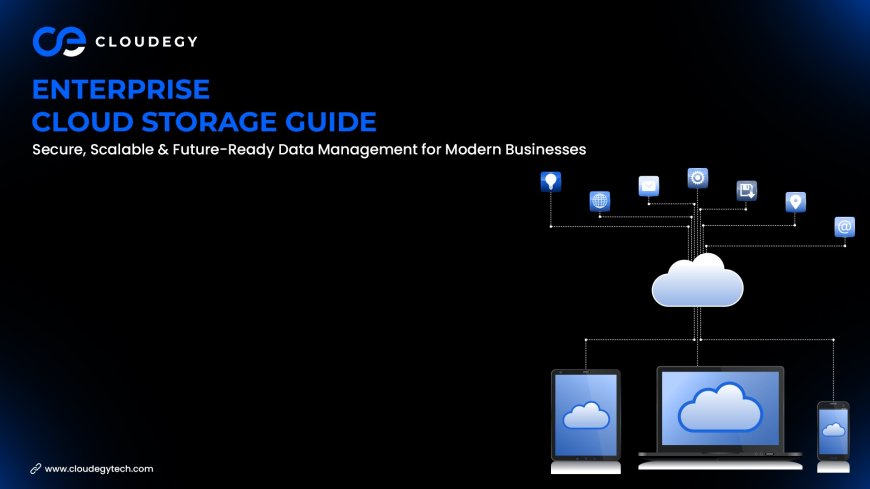
Enterprise Cloud Storage Guide: Secure, Scalable & Future-Ready Data Management for Modern Businesses
In today’s digital-first economy, data is the backbone of every enterprise. From customer information to operational workflows, businesses generate massive amounts of data every day.

Managing this data efficiently is no longer optional—it’s critical.
This is where enterprise cloud storage becomes a game-changing solution.
In this guide, we’ll explore what enterprise cloud storage is, why it matters, and how businesses can leverage it for growth, security, and scalability.
What is Enterprise Cloud Storage?
Enterprise cloud storage is a centralized, cloud-based solution designed to store, manage, and secure large volumes of business data.
Unlike basic storage solutions, enterprise cloud storage offers:
• High-level security
• Scalability for growing data needs
• Advanced access control
• Seamless integration with business systems
It is built specifically for organizations handling critical and sensitive data.
Why Enterprises Need Cloud Storage
Traditional storage systems struggle to keep up with modern business demands.
Here’s why enterprises are shifting to cloud storage:
1. Explosive Data Growth
Businesses generate data from:
• Applications
• Customer interactions
• IoT devices
• Analytics tools
Cloud storage provides virtually unlimited capacity.
2. Remote & Hybrid Work
Teams need access to data from anywhere.
Cloud storage enables:
• Real-time collaboration
• Secure remote access
• Cross-device compatibility
3. Security Requirements
Data breaches and cyber threats are increasing.
Enterprise cloud storage offers:
• Encryption
• Access control
• Monitoring systems
4. Cost Optimization
Cloud eliminates:
• Hardware costs
• Maintenance expenses
• IT infrastructure overhead
Key Features of Enterprise Cloud Storage
1. Scalability
Easily scale storage as your business grows without infrastructure upgrades.
2. Data Security
Includes:
• End-to-end encryption
• Multi-factor authentication
• Role-based access
3. High Availability
Ensures data is always accessible with minimal downtime.
4. Backup & Recovery
Automatic backups and quick recovery options protect against data loss.
5. Integration Capabilities
Works seamlessly with:
• CRM systems
• ERP platforms
• Business applications
Types of Enterprise Cloud Storage
1. Public Cloud Storage
• Hosted by third-party providers
• Cost-effective
• Easy to deploy
2. Private Cloud Storage
• Dedicated infrastructure
• Higher security
• Full control
3. Hybrid Cloud Storage
• Combines public + private cloud
• Flexible and balanced approach
Benefits of Enterprise Cloud Storage
1. Improved Efficiency
Teams can access and share data instantly.
2. Enhanced Collaboration
Multiple users can work on files simultaneously.
3. Data Protection
Advanced security reduces risks of breaches and loss.
4. Business Continuity
Ensures operations continue during disruptions.
5. Global Accessibility
Access data from anywhere in the world.
How to Choose the Right Enterprise Cloud Storage
Selecting the right solution is critical.
1. Security Standards
Look for:
• Encryption protocols
• Compliance certifications
• Access controls
2. Scalability Options
Ensure the platform can grow with your business.
3. Performance & Speed
Fast data access and minimal latency are essential.
4. Cost Structure
Understand pricing models:
• Pay-as-you-go
• Subscription-based
5. Integration Support
Check compatibility with existing tools and systems.
Best Practices for Enterprise Cloud Storage
1. Implement Access Control
Limit data access based on roles and responsibilities.
2. Encrypt Sensitive Data
Always use encryption for critical business information.
3. Regular Backups
Ensure automated backup systems are active.
4. Monitor Activity
Track user activity to detect unusual behavior.
5. Train Employees
Educate teams about data security and best practices.
Common Challenges & Solutions
Challenge 1: Data Security Concerns
Solution: Use advanced encryption and authentication.
Challenge 2: Migration Complexity
Solution: Plan migration in phases.
Challenge 3: Cost Management
Solution: Optimize storage usage and monitor expenses.
Challenge 4: Compliance Issues
Solution: Choose providers that meet industry regulations.
Future of Enterprise Cloud Storage
The future of cloud storage is evolving with:
• AI-driven data management
• Automated security systems
• Edge computing integration
• Multi-cloud strategies
Enterprises adopting these technologies will stay competitive.
Why Enterprise Cloud Storage is a Smart Investment
Investing in cloud storage helps businesses:
• Reduce risks
• Improve productivity
• Scale effortlessly
• Stay competitive
Conclusion
Enterprise cloud storage is no longer just a technology upgrade—it’s a business necessity.
It provides the foundation for secure, scalable, and efficient data management in a rapidly evolving digital landscape.
Businesses that adopt cloud storage today are better prepared for tomorrow’s challenges.
What's Your Reaction?
 Like
0
Like
0
 Dislike
0
Dislike
0
 Love
0
Love
0
 Funny
0
Funny
0
 Angry
0
Angry
0
 Sad
0
Sad
0
 Wow
0
Wow
0