









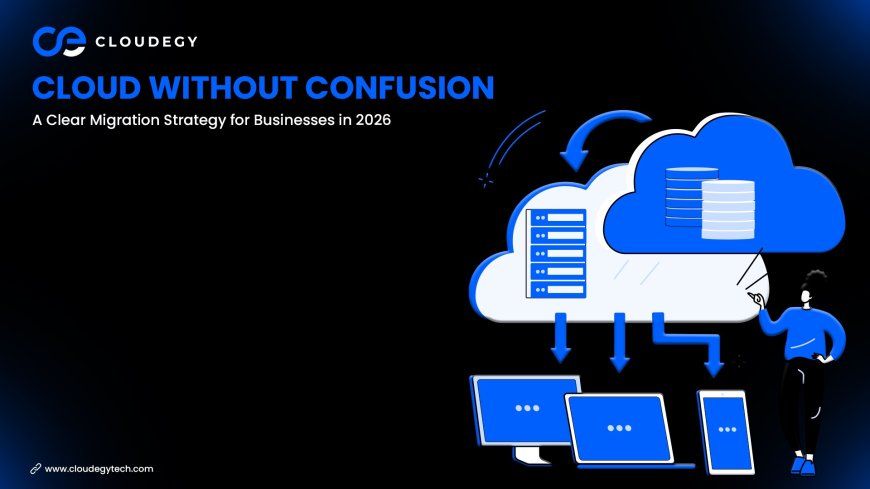
Cloud Without Confusion: A Clear Migration Strategy for Businesses in 2026
For many businesses, moving to the cloud still feels complicated. There are concerns about data security, downtime, costs, and technical challenges. As a result, organizations often delay migration—even when they know it’s necessary.

But cloud migration doesn’t have to be confusing.
With the right strategy, businesses can transition smoothly, improve efficiency, and unlock new growth opportunities. This guide simplifies the entire process, giving you a clear roadmap to move your business to the cloud without unnecessary risks.
What Does Cloud Migration Really Mean?
Cloud migration is the process of shifting your digital operations—data, applications, and systems—from traditional setups to cloud-based platforms.
Instead of relying on physical servers, businesses use online infrastructure that offers flexibility, scalability, and remote access.
This shift is not just technical—it’s a strategic upgrade.
Why Businesses Are Prioritizing Cloud Migration
Modern businesses are choosing cloud solutions because they solve real problems.
Here’s what drives the shift:
• Growing data storage needs
• Remote and hybrid work environments
• Rising IT maintenance costs
• Demand for faster performance
• Need for business continuity
Cloud technology addresses these challenges while enabling long-term scalability.
A Clear Cloud Migration Strategy (Step-by-Step)
Step 1: Understand Your Current Setup
Before moving forward, evaluate your existing systems.
Ask:
• Which applications are critical?
• What data needs to be migrated?
• What are your current limitations?
This step creates a solid foundation for planning.
Step 2: Define Your Migration Goals
Every business has different priorities.
Common goals include:
• Reducing operational costs
• Improving system performance
• Enhancing data security
• Supporting remote teams
Clear objectives help you make better decisions.
Step 3: Choose the Right Cloud Approach
Not all migrations follow the same path.
You can choose:
• Lift-and-shift (quick move)
• Replatforming (small improvements)
• Refactoring (complete transformation)
The right approach depends on your business needs.
Step 4: Select a Reliable Cloud Environment
Choosing the right platform is crucial.
Look for:
• Strong security features
• Scalability options
• Cost transparency
• Reliable support
Your cloud environment should align with your long-term goals.
Step 5: Plan Your Data Migration Carefully
Data is your most valuable asset.
Ensure:
• Secure data transfer
• Backup before migration
• Minimal downtime
Proper planning avoids data loss and disruptions.
Step 6: Focus on Security from Day One
Security should never be an afterthought.
Implement:
• Data encryption
• Access controls
• Multi-factor authentication
This protects your business from threats.
Step 7: Test Everything Before Going Live
Testing is essential for a smooth transition.
Check:
• Application performance
• Data accuracy
• System compatibility
Fix issues before full deployment.
Step 8: Migrate in Phases
Avoid moving everything at once.
Instead:
• Start with non-critical systems
• Gradually shift core operations
This reduces risk and ensures stability.
Step 9: Monitor and Optimize
After migration:
• Track performance
• Optimize resources
• Reduce unnecessary costs
Cloud environments require continuous improvement.
Step 10: Train Your Team
Technology is only effective when people understand it.
Provide training on:
• Cloud tools
• Security practices
• Workflow changes
A skilled team ensures long-term success.
Role of Cloud Storage in Migration
Cloud storage is a key component of migration.
It allows businesses to:
• Store large volumes of data securely
• Access files from anywhere
• Share information easily
Solutions like Cloudegy Drive simplify this process by offering secure and scalable storage.
👉 https://drive.cloudegytech.com/
Common Mistakes to Avoid
Many businesses face issues due to poor planning.
Avoid these mistakes:
• Migrating without a strategy
• Ignoring security
• Skipping testing
• Moving everything at once
• Underestimating training needs
Being proactive prevents costly errors.
Benefits of a Clear Migration Strategy
Smooth Transition
Minimizes downtime and disruptions.
Better Performance
Cloud systems improve speed and efficiency.
Scalability
Easily adjust resources as your business grows.
Cost Control
Pay only for what you use.
Improved Collaboration
Teams can work from anywhere with ease.
Real-World Scenario
A mid-sized business relying on local servers faces frequent downtime and rising maintenance costs.
After migrating to the cloud:
✅ Systems become more reliable
✅ Data is accessible remotely
✅ Operational costs decrease
✅ Team productivity increases
This highlights the real impact of cloud migration.
Future of Cloud Migration
Cloud migration will continue to evolve with:
• AI-driven automation
• Serverless technologies
• Multi-cloud environments
• Advanced security solutions
Businesses adopting these trends early will stay competitive.
Best Practices for Success
To ensure a successful migration:
• Plan thoroughly
• Prioritize security
• Automate processes
• Monitor continuously
• Adapt as needed
Consistency and clarity are key.
Conclusion
Cloud migration doesn’t have to be overwhelming.
With a clear strategy, businesses can move to the cloud confidently and efficiently. The benefits—scalability, cost savings, and flexibility—make it a smart investment for the future.
By taking a structured approach, your business can unlock the full potential of cloud technology without confusion or risk.
What's Your Reaction?
 Like
0
Like
0
 Dislike
0
Dislike
0
 Love
0
Love
0
 Funny
0
Funny
0
 Angry
0
Angry
0
 Sad
0
Sad
0
 Wow
0
Wow
0